
Filter
4389 Publications
Showing 4331-4340 of 4389 resultsThe maleless (mle) gene is one of four known regulatory loci required for increased transcription (dosage compensation) of X-linked genes in D. melanogaster males. A predicted mle protein (MLE) contains seven short segments that define a superfamily of known and putative RNA and DNA helicases. MLE, while present in the nuclei of both male and female cells, differs in its association with polytene X chromosomes in the two sexes. MLE is associated with hundreds of discrete sites along the length of the X chromosome in males and not in females. The predominant localization of MLE to the X chromosome in males makes it a strong candidate to be a direct regulator of dosage compensation.
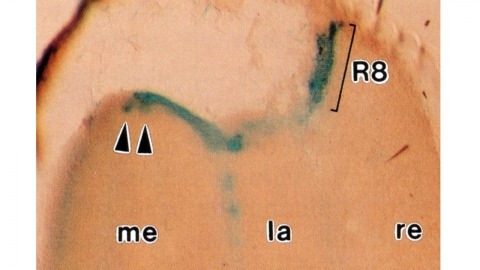
Histological staining of wild-type and sevenless transgenic Drosophila melanogaster bearing Rh3-lacZ fusion genes permits the selective visualization of polarization-sensitive R7 and R8 photoreceptor cells located along the dorsal anterior eye margin. Diffusion of beta-galactosidase throughout these cells reveals that they project long axons to the two most peripheral synaptic target rows of the dorsal posterior medulla, defining a specialized marginal zone of this optic lobe. Comparison of the staining patterns of marginal and nonmarginal Rh3-lacZ-expressing photoreceptor cells in the same histological preparations suggest that the marginal cells possess morphologically specialized axons and synaptic terminals. These findings are discussed with reference to the neuroanatomy of the corresponding dorsal marginal eye and optic lobe regions of the larger dipterans Musca and Calliphora, and in relation to the ability of Drosophila to orient to polarized light.
The expression of GABA is restricted to the progeny of only six of the 24 identified postembryonic lineages in the thoracic ganglia of the tobacco hornworm, Manduca sexta (Witten and Truman, 1991). It is colocalized with a peptide similar to molluscan small cardioactive peptide B (SCPB) in some of the neurons in two of the six lineages. By combining chemical ablation of the neuroblasts at specific larval stages with birth dating of the progeny, we tested whether the expression of GABA and the SCPB-like peptide was determined strictly by cell lineage or involved cellular interactions among the members of individual clonal groups. Chemical ablation of the six specific neuroblasts that produced the GABA-positive neurons (E, K, M, N, T, and X) or of the two that produced the GABA + SCPB-like-immunoreactive neurons (K, M) prior to the generation of their lineages resulted in the loss of these immunoreactivities. These results suggest that regulation between lineages did not occur. Ablation of the K and M neuroblasts after they had produced a small portion of their lineages had no effect on the expression of GABA, but did affect the pattern of the SCPB-like immunoreactivity. Combining birth-dating techniques with transmitter immunocytochemistry revealed that it was the position in the birth order and not interactions among the clonally related neurons that influenced the peptidergic phenotype. These results suggest that cell lineage is involved in establishing the GABAergic phenotype and that both cell lineage and birth order influence the determination of the peptidergic phenotype.(ABSTRACT TRUNCATED AT 250 WORDS)
Human mitochondrial transcription factor 1 (mtTF1) has been sequenced and is a nucleus-encoded DNA binding protein of 204 amino acids (24,400 daltons). Expression of human mtTF1 in bacteria yields a protein with correct physical properties and the ability to activate mitochondrial DNA promoters. Analysis of the protein’s sequence reveals no similarities to any other DNA binding proteins except for the existence of two domains that are characteristic of high mobility group (HMG) proteins. Human mtTF1 is most closely related to a DNA binding HMG-box region in hUBF, a human protein known to be important for transcription by RNA polymerase I.
Defects in mitochondrial DNA (mtDNA) are associated with several different human diseases, including the mitochondrial encephalomyopathies. The mutations include deletions but also duplications and point mutations. Individuals with MELAS (mitochondrial myopathy, encephalopathy, lactic acidosis and stroke-like episodes) carry a common A-to-G substitution in a highly conserved portion of the gene for transfer RNA(Leu(UUR)). Although the MELAS mutation may be comparable to the defect in the tRNA(Lys) gene associated with MERRF (myoclonus epilepsy associated with ragged-red fibres), it is also embedded in the middle of a tridecamer sequence necessary for the formation of the 3’ ends of 16S ribosomal RNA in vitro. We found that the MELAS mutation results in severe impairment of 16S rRNA transcription termination, which correlates with a reduced affinity of the partially purified termination protein for the MELAS template. This suggests that the molecular defect in MELAS is the inability to produce the correct type and quantity of rRNA relative to other mitochondrial gene products.
In near-field scanning optical microscopy, a light source or detector with dimensions less than the wavelength (lambda) is placed in close proximity (lambda/50) to a sample to generate images with resolution better than the diffraction limit. A near-field probe has been developed that yields a resolution of approximately 12 nm ( approximately lambda/43) and signals approximately 10(4)- to 10(6)-fold larger than those reported previously. In addition, image contrast is demonstrated to be highly polarization dependent. With these probes, near-field microscopy appears poised to fulfill its promise by combining the power of optical characterization methods with nanometric spatial resolution.
In near-field scanning optical microscopy, a light source or detector with dimensions less than the wavelength (lambda) is placed in close proximity (lambda/50) to a sample to generate images with resolution better than the diffraction limit. A near-field probe has been developed that yields a resolution of approximately 12 nm ( approximately lambda/43) and signals approximately 10(4)- to 10(6)-fold larger than those reported previously. In addition, image contrast is demonstrated to be highly polarization dependent. With these probes, near-field microscopy appears poised to fulfill its promise by combining the power of optical characterization methods with nanometric spatial resolution.
Commentary: Introduced the adiabatically tapered single mode fiber probe to near-field scanning optical microscopy which, together with shear force feedback, made the technique a practical reality. Although earlier claims of superresolution via near-field microscopy existed for nearly a decade, this paper was the first to convincingly break Abbe’s limit with visible light, as demonstrated by reproducibly resolving known, complex nanoscale patterns having features separated by much less than the wavelength. Whereas our fiber probe and shear force technologies were soon widely adopted and key to many novel applications (see above), the earlier methods proved to be technological dead ends, never achieving the results of their original claims. This experience taught me the most valuable lesson of my career: while it’s bad to bullshit others, it’s even worse to bullshit yourself. It’s a lesson sadly unheeded by many current practitioners of superresolution microscopy.
Male orchid bees of the species Eulaema meriana buzz their wings while stationary at territory perches. During buzzing, wings are first positioned laterally and then moved in a plane parallel to the ground, which probably generates a substantial airflow past the body. Within a perching episode, the ratio of buzz to pause duration decreases nonlinearly. The incidence of wing buzzing increases with ambient temperature and with duration of activity. Bees never defended territories when ambient temperatures exceeded 28.5°C. Wing buzzing may be a visual or acoustic display to conspecifics, although the brightly colored abdomen is never obscured by the wings during buzzing, and the sounds of wing buzzing are low in amplitude. The increase in buzzing frequency with increased ambient temperature and the nonlinear decrease in buzz to pause duration during perching suggest that wing buzzing may be a thermoregulatory mechanism.
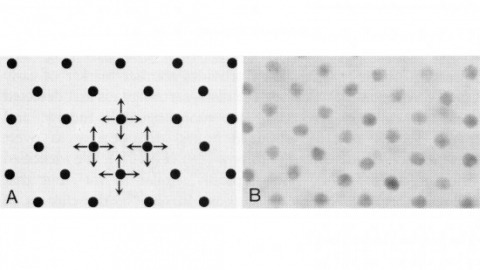
In the development of multicellular organisms a diversity of cell types differentiate at specific positions. Spacing patterns, in which an array of two or more cell types forms from a uniform field of cells, are a common feature of development. Identical precursor cells may adopt different fates because of competition and inhibition between them. Such a pattern in the developing Drosophila eye is the evenly spaced array of R8 cells, around which other cell types are subsequently recruited. Genetic studies suggest that the scabrous mutation disrupts a signal produced by R8 cells that inhibits other cells from also becoming R8 cells. The scabrous locus was cloned, and it appears to encode a secreted protein partly related to the beta and gamma chains of fibrinogen. It is proposed that the sca locus encodes a lateral inhibitor of R8 differentiation. The roles of the Drosophila EGF-receptor homologue (DER) and Notch genes in this process were also investigated.