
Filter
2972 Janelia Publications
Showing 2951-2960 of 2972 resultsRecent advances in single-neuron biophysics have enhanced our understanding of information processing on the cellular level, but how the detailed properties of individual neurons give rise to large-scale behavior remains unclear. Here, we present a model of the hippocampal network based on observed biophysical properties of hippocampal and entorhinal cortical neurons. We assembled our model to simulate spatial alternation, a task that requires memory of the previous path through the environment for correct selection of the current path to a reward site. The convergence of inputs from entorhinal cortex and hippocampal region CA3 onto CA1 pyramidal cells make them potentially important for integrating information about place and temporal context on the network level. Our model shows how place and temporal context information might be combined in CA1 pyramidal neurons to give rise to splitter cells, which fire selectively based on a combination of place and temporal context. The model leads to a number of experimentally testable predictions that may lead to a better understanding of the biophysical basis of information processing in the hippocampus.
Bacterial small non-coding RNAs (sRNAs) are being recognized as novel widespread regulators of gene expression in response to environmental signals. Here, we present the first search for sRNA-encoding genes in the nitrogen-fixing endosymbiont Sinorhizobium meliloti, performed by a genome-wide computational analysis of its intergenic regions. Comparative sequence data from eight related alpha-proteobacteria were obtained, and the interspecies pairwise alignments were scored with the programs eQRNA and RNAz as complementary predictive tools to identify conserved and stable secondary structures corresponding to putative non-coding RNAs. Northern experiments confirmed that eight of the predicted loci, selected among the original 32 candidates as most probable sRNA genes, expressed small transcripts. This result supports the combined use of eQRNA and RNAz as a robust strategy to identify novel sRNAs in bacteria. Furthermore, seven of the transcripts accumulated differentially in free-living and symbiotic conditions. Experimental mapping of the 5’-ends of the detected transcripts revealed that their encoding genes are organized in autonomous transcription units with recognizable promoter and, in most cases, termination signatures. These findings suggest novel regulatory functions for sRNAs related to the interactions of alpha-proteobacteria with their eukaryotic hosts.
We present a model for olfactory coding based on spatial representation of glomerular responses. In this model distinct odorants activate specific subsets of glomeruli, dependent on the odorant’s chemical identity and concentration. The glomerular response specificities are understood statistically, based on experimentally measured distributions of activation thresholds. A simple version of the model, in which glomerular responses are binary (the all-or-nothing model), allows us to account quantitatively for the following results of human/rodent olfactory psychophysics: 1) just noticeable differences in the perceived concentration of a single odor (Weber ratios) are as low as dC/C approximately 0.04; 2) the number of simultaneously perceived odors can be as high as 12; and 3) extensive lesions of the olfactory bulb do not lead to significant changes in detection or discrimination thresholds. We conclude that a combinatorial code based on a binary glomerular response is sufficient to account for several important features of the discrimination capacity of the mammalian olfactory system.
Comparative analysis of multiple genomes in a phylogenetic framework dramatically improves the precision and sensitivity of evolutionary inference, producing more robust results than single-genome analyses can provide. The genomes of 12 Drosophila species, ten of which are presented here for the first time (sechellia, simulans, yakuba, erecta, ananassae, persimilis, willistoni, mojavensis, virilis and grimshawi), illustrate how rates and patterns of sequence divergence across taxa can illuminate evolutionary processes on a genomic scale. These genome sequences augment the formidable genetic tools that have made Drosophila melanogaster a pre-eminent model for animal genetics, and will further catalyse fundamental research on mechanisms of development, cell biology, genetics, disease, neurobiology, behaviour, physiology and evolution. Despite remarkable similarities among these Drosophila species, we identified many putatively non-neutral changes in protein-coding genes, non-coding RNA genes, and cis-regulatory regions. These may prove to underlie differences in the ecology and behaviour of these diverse species.
The hippocampus is essential for episodic memory, which requires single-trial learning. Although long-term potentiation (LTP) of synaptic strength is a candidate mechanism for learning, it is typically induced by using repeated synaptic activation to produce precisely timed, high-frequency, or rhythmic firing. Here we show that hippocampal synapses potentiate robustly in response to strong activation by a single burst. The induction mechanism of this single-burst LTP requires activation of NMDA receptors, L-type voltage-gated calcium channels, and dendritic spikes. Thus, dendritic spikes are a critical trigger for a form of LTP that is consistent with the function of the hippocampus in episodic memory.
Inducible and reversible perturbation of the activity of selected neurons in vivo is critical to understanding the dynamics of brain circuits. Several genetically encoded systems for rapid inducible neuronal silencing have been developed in the past few years offering an arsenal of tools for in vivo experiments. Some systems are based on ion-channels or pumps, others on G protein coupled receptors, and yet others on modified presynaptic proteins. Inducers range from light to small molecules to peptides. This diversity results in differences in the various parameters that may determine the applicability of each tool to a particular biological question. Although further development would be beneficial, the current silencing tool kit already provides the ability to make specific perturbations of circuit function in behaving animals.
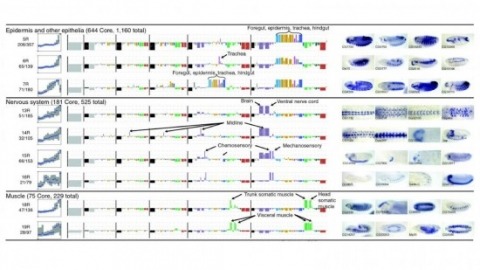
Cell and tissue specific gene expression is a defining feature of embryonic development in multi-cellular organisms. However, the range of gene expression patterns, the extent of the correlation of expression with function, and the classes of genes whose spatial expression are tightly regulated have been unclear due to the lack of an unbiased, genome-wide survey of gene expression patterns.
Staining the mRNA of a gene via in situ hybridization (ISH) during the development of a D. melanogaster embryo delivers the detailed spatio-temporal pattern of expression of the gene. Many biological problems such as the detection of co-expressed genes, co-regulated genes, and transcription factor binding motifs rely heavily on the analyses of these image patterns. The increasing availability of ISH image data motivates the development of automated computational approaches to the analysis of gene expression patterns.
Cortical maps, consisting of orderly arrangements of functional columns, are a hallmark of the organization of the cerebral cortex. However, the microorganization of cortical maps at the level of single neurons is not known, mainly because of the limitations of available mapping techniques. Here, we used bulk loading of Ca(2+) indicators combined with two-photon microscopy to image the activity of multiple single neurons in layer (L) 2/3 of the mouse barrel cortex in vivo. We developed methods that reliably detect single action potentials in approximately half of the imaged neurons in L2/3. This allowed us to measure the spiking probability following whisker deflection and thus map the whisker selectivity for multiple neurons with known spatial relationships. At the level of neuronal populations, the whisker map varied smoothly across the surface of the cortex, within and between the barrels. However, the whisker selectivity of individual neurons recorded simultaneously differed greatly, even for nearest neighbors. Trial-to-trial correlations between pairs of neurons were high over distances spanning multiple cortical columns. Our data suggest that the response properties of individual neurons are shaped by highly specific subcolumnar circuits and the momentary intrinsic state of the neocortex.
This paper presents a new study on a method of designing a multi-class classifier: Data-driven Error Correcting Output Coding (DECOC). DECOC is based on the principle of Error Correcting Output Coding (ECOC), which uses a code matrix to decompose a multi-class problem into multiple binary problems. ECOC for multi-class classification hinges on the design of the code matrix. We propose to explore the distribution of data classes and optimize both the composition and the number of base learners to design an effective and compact code matrix. Two real world applications are studied: (1) the holistic recognition (i.e., recognition without segmentation) of touching handwritten numeral pairs and (2) the classification of cancer tissue types based on microarray gene expression data. The results show that the proposed DECOC is able to deliver competitive accuracy compared with other ECOC methods, using parsimonious base learners than the pairwise coupling (one-vs-one) decomposition scheme. With a rejection scheme defined by a simple robustness measure, high reliabilities of around 98% are achieved in both applications.