Visiting Scientists
The Visitor Program is unparalleled; no other program in a traditional research setting is likely to dedicate laboratory space and significant research support to a group of visiting scientists to conduct research of their own design.
In addition to supporting the individual research programs of Janelia lab heads, a significant fraction of the resources at Janelia Farm support the Visitor Program, a research program that brings together resident scientists and visiting scientists from all over the world to carry out research at Janelia Farm. Visitors are expected to participate fully in the ongoing intellectual life of the campus.
Visitors range in career stage from graduate students to postdoctoral fellows to very senior, established investigators and represent multiple disciplines: biologists, chemists, computer scientists, engineers, theorists, and physicists, to name a few. To date, 156 visiting scientists from 16 countries have participated in the Visitor Program.
In general, the visitors' research must be collaborative with that of the Janelia lab heads who act as their official hosts.
- Individual visitor: One visiting scientist, perhaps with one or two members of his or her research team, is closely allied with the laboratory of an individual Janelia lab head or is part of a collaborative effort between a small number of lab heads.
- Project team: A group of visiting scientists aim to work together on an ambitious, collaborative research project at Janelia Farm that would be difficult to accomplish elsewhere. In general, such project teams may be provided with a small number of Janelia-funded staff and full access to our core shared resource labs. Preference is given to projects that are clearly allied to the overall mission of Janelia.
- Short-term visitors: To extend the availability of cutting-edge technology and state-of-the art facilities at Janelia to the larger biomedical research community, we also accommodate short-term visitors of two types:
- HHMI investigators, members of their laboratories, HHMI international scholars, and other members of the scientific community (as capacity allows) who may come to Janelia Farm for periods of a few days to a few weeks to make use of specific equipment or facilities not available to them at their home institution.
- Scientists who may come for a week or two to interact informally with our research community.
For both individual visitors and project teams, various time-sharing arrangements are possible - for example, a full-time sabbatical by the visiting scientist or an arrangement in which the visiting scientist spends one week a month at Janelia but has a person or two in residence full time. The visitor should propose a specific arrangement as part of the proposal. Arrangements extending beyond a year are reviewed on an annual basis.
Available resources may include: laboratory and office space for the visiting scientist while in residence, access to shared resource labs, funds for supplies, travel to and from Janelia, residential housing, and salary support for the visitor or for dedicated staff.
A visitor is hosted by a Janelia lab head. Applications are accepted on a continuous basis. If you are interested in applying to the Janelia Farm Visitor Program, please begin by writing a statement of research interest; include a brief description of the project, requested staff and costs, and a list of potential Janelia lab head collaborators. Send your curriculum vitae and research statement to Dr. Zarixia Zavala-Ruiz.
For questions about the Visitor Program:
Zarixia Zavala-Ruiz, Ph.D.
Science Program Manager
Professor Ulrike Gaul and graduate student Malte Kremer, from the Gene Center of the LMU Munich, study the role of glial cells in the development and function of the fruit fly brain. As visiting scientists in the Visitor Program, they collaborated with scientists at Janelia Farm to characterize glial-cell specific expression in fruit flies.
The morphology of glia in the adult Drosophila nervous system
The glia in the Drosophila adult brain have only partially been described, and while glial-specific drivers had been found within the Janelia collection of nervous system GAL4 drivers, they were not fully annotated or characterized. In this visitor project, Dr. Ulrike Gaul and graduate student Malte Kremer sought to use the drivers in the Janelia collection to identify all glial cell types present in the adult brain and characterize them with regard to their number, morphology, and intercellular interaction. Screening the entire collection of 7,000 GAL4 lines, they found 800 with glial expression, and 250 that are expressed specifically in glia. Among these 250, they identified not only lines that are generally expressed in all cells of a given glial cell type, but also lines with regionally restricted expression, especially in the optic lobes and the ventral nerve cord. This project will contribute to the understanding of the diversity and complexity of glial cell anatomy and provide important tools for future studies of glial function.
Dr. William Schafer and graduate student, Victoria Butler, from the Medical Research Council Laboratory of Molecular Biology at Cambridge, are collaborating with scientists at Janelia Farm through the Visitor Program to understand how patterns of neuromuscular activity generate C. elegans locomotor behavior.
The coordination of complex body movements uses sensory feedback to detect forces associated with body movements. The molecules involved in the sensory feedback as well as the mechanism by which the neural circuits regulate locomotion are not well understood. In collaboration with Drs. Dmitri Chklovskii and Rex Kerr at Janelia Farm, Dr. William Schafer and graduate student, Victoria Butler, have developed a tracking microscope that allows simultaneous recording of nematode behavior and neuromuscular calcium transients. They have generated transgenic lines expressing the fluorescent calcium indicator GCaMP3 in body wall muscle and sub-classes of motor neurons. The aim now is to use these lines to observe the muscle and neuron activity in behaving worms under different environmental conditions and in different mutant backgrounds. They hope to use the data collected to develop mechanistic models for C. elegans locomotion behaviors.
Visitor(s): David Anderson (Professor, California Institute of Technology/HHMI), Eric Hoopfer (Post-doctoral fellow, California Institute of Technology), Brooks Zhongzheng Fu (Ph.D. Student, California Institute of Technology)
Host: Gerry Rubin (Executive Director, JFRC)
Objective: To (1) refine these neuronal populations down to the specific cell types responsible for the phenotype; and (2) understand the relationship between the circuits that control different aspects of male social behavior.
Visitor: Detlev Arendt (Group Leader, Developmental Biology, EMBL Heidelberg) and Mette Handberg-Thorsager (Associate, HHMI/JFRC)
Host: Philipp Keller (HHMI/JFRC Lab Head)
Objective: To generate the first cellular resolution expression atlas involving early developmental as well as differentiation stages for a whole animal, the marine annelid Platynereis dumerilii, using PrImR (Profiling by Image Registration) protocol developed by the Arendt lab.
Visitor: David Baker (HHMI/University of Washington) and Shane Gonen (Ph.D. Student in Baker’s Lab)
Host(s): Tamir Gonen (HHMI/JFRC, Lab Head)
Objective: To design protein assemblies and validating the designs using structural methods.
Visitor(s): Tiago Branco (Programmer Leader Track, MRC Laboratory for Molecular Biology, Cambridge, UK)
Host: Scott Sternson (HHMI/JFRC Lab Head)
Objective: To describe the excitatory input-output function of AGRP neurons and identify the key molecular components responsible for coupling grelin-dependent glutamatergic excitation with action potential activity.
Visitor: Patrick Dennis (Emeritus Professor, The University of British Columbia)
Host: Sean Eddy (HHMI/JFRC Lab Head)
Objective: To annotate and characterize novel small RNAs identified in a high-throughput screen.
Visitor: William Dowhan (Professor, Department of Biochemistry & Molecular Biology, University of Texas-Houston) and Heidi Vitrac (Postdoctoral Researcher in Dowhan's lab)
Host: Tami Gonen (HHMI/JFRC Lab Head)
Objective: To study how different lipids affect the conformational topology (structure) of the lactose permease LacY.
Visitor: Timothy J. Florence (Charles Zuker Lab, HHMI/Columbia University)
Host: Michael Reiser (HHMI/JFRC Lab Head)
Objective: To examine the potential contribution of distance estimation in fly behavior using two experimental strategies.
Visitors: Barry Ganetzky (Professor of Genetics and Steenbock Professor of Biological Sciences, University of Wisconsin) and Shannon Ballard (Postdoctoral Research Fellow, University of Wisconsin)
Host: Jim Truman (HHMI/JFRC Lab Head)
Objective: To study the development of central synapses in the Drosophila CNS.
Visitors: Anirvan Ghosh (Chair and Professor of Neurobiology, University of California, San Diego) and Tevye Stachniak (Associate, HHMI/Janelia)
Host: Scott Sternson (HHMI/JFRC Lab Head)
Objective: To develop cell-type specific chemical genetic and optogenetic approaches for manipulating subsets of synapses in molecularly-defined circuits.
Visitor: David Golomb (Head and Professor, Department of Physiology, Ben-Gurion University, Israel)
Hosts: Karel Svoboda (HHMI/JFRC Lab Head), Jeff Magee (HHMI/JFRC Lab Head) and Josh Dudman (HHMI/JFRC Lab Head)
Objective: To study the dynamics of cortical neurons and their networks in the rodent somatosensory-motor system.
Visitor: Shukry Habib (Postdoctoral Research Fellow, Stanford School of Medicine)
Host: Eric Betzig (HHMI/JFRC Lab Head)
Objective: To visualize the effect of the Wnt signal on the spindle orientation during the division of mESCs using the Bessel Beam Illumination Microscope developed by Betzig's group.
Visitors: Fred Hamprecht (Professor, University of Heidelberg)
Host: Fly EM, Davi Bock (HHMI/JFRC Lab Head) and Albert Cardona (HHMI/JFRC Lab Head)
Objective: To collaborate with Dmitri Chklovskii, Lou Scheffer, Davi Bock and Albert Cardona on the further development of ilastik to process neuronal images.
Visitors: Reid Harrison (President and Chief Scientist, Intan Technologies, L.L.C.), Matt Reynolds (Assistant Professor of Electrical and Computer Engineering, Duke University) and Stewart Thomas (Ph.D. Student, Duke University)
Host: Anthony Leonardo (HHMI/JFRC Lab Head)
Objective: To construct a low-power wireless device for recording from large numbers of neurons in free-flying dragonflies.
Visitor: Bassem Hassan (Senior Group Leader, Laboratory of Neurogenetics, VIB and K.U. Leuven School of Medicine) and Bill Lemon (Research Specialist, HHMI/Janelia Farm)
Host: Gerry Rubin (Executive Director)
Objective: To map the atonal visual circuit in the pupa and the adult of Drosophila using the Janelia GAL4 collection.
Visitor: Peter Hegemann (Professor, Humboldt-University) and Yan Zhang (Research Specialist, Janelia Farm)
Host: Gabe Murphy (HHMI/JFRC Lab Head), and Loren Looger (HHMI/JFRC Lab Head)
Objective: To (1) engineer a known, well-characterized, K+ channel to be light-, rather than ligand-, gated and (2) render ChR2 K+ selective.
Visitor: Seung-Il Huh (Graduate Student, Carnegie Mellon University)
Host: Kristin Branson (HHMI/JFRC Lab Head)
Objective: To develop new automated methods for tracking animal behaviors.
Visitor: Dezhe Jin (Pennsylvania State University)
Host: Nelson Spruston (HHMI/JFRC Scientific Program Director and Lab Head)
Objective: To understand the effect of genetic manipulations on the neuronal functions in the hippocampus and associated areas of the mouse.
Visitors: William Kath (Professor and Co-Director of Institute on Complex Systems, Department of Engineering Sciences and Applied Mathematics, Northwestern University) and Aushra Abouzeid (Postdoctoral Fellow, William Kath Lab, Engineering Sciences and Applied Mathematics, McCormick School of Engineering, Northwestern University)
Host: Nelson Spruston (HHMI/JFRC Scientific Program Director and Lab Head)
Objective: To continue collaborative work on modeling and experimental analysis of hippocampal neurons and microcircuits.
Visitor: Jeff Kieft (HHMI/University of Colorado School of Medicine)
Host: Tamir Gonen (HHMI/JFRC Lab Head)
Objective: To study ribosome biochemistry in neurons and explore the idea that ribosomes in the synapse have different features to the dendrites.
Visitors: Jihnyun Kim (Korea Institute of Science and Technology), Bokyoung Lee (Ph.D. Student, Korea Institute of Science and Technology), Linqing Feng (Ph.D. candidate, Zhejiang Univeristy)
Host: Jeff Magee (HHMI/JFRC Lab Head)
Objective: To apply mGRASP-based technology developed here at Janelia to characterize the synaptic connectivity patterns between particular sets of neuronal circuits and individual cell types within specific circuits.
Visitor: Matthieu Louis (Group Leader, Systems Biology, Center for Genomic Regulation, Barcelona), Alex Gomez-Marin (Postdoctoral Research Fellow, Center for Genomic Regulation), and Vani Rajendran (Graduate Student, Center for Genomic Regulation)
Host: Vivek Jayaraman (HHMI/Janelia Lab Head)
Objective: To clarify the neural basis of odor coding in the miniature olfactory system of the fruit fly larva through two approaches: clarifying how the quality of an odor is encoded by a single type of odorant receptor; and understanding how dynamic olfactory stimuli with ethological relevance are represented by the activity patterns of single and combination of OSN(s).
Visitor(s): Mala Murthy (Assistant Professor, Princeton Neuroscience Institute)
Host: David Stern (HHMI/JFRC Lab Head)
Objective: To develop a novel multichannel system for assaying female responses to male courtship song.
Visitor(s): Eugene W. Myers Jr. (Director, Max Planck Institute for Molecular Cell Biology and Genetics)
Host(s): Karel Svoboda (HHMI/JFRC Lab Head) and Adam Hantman (HHMI/JFRC Lab Head)
Objective: The project entails three aims: (a) the refinement of our high-speed multi-photon microscope to the point were it can be placed in the care of end-users at Janelia, (b) the acquisition of several full, sparsely-stained mouse brain volumes and an assessment of our ability to reconstruct individual neurons within such volumes, and (c) refinement of the scope to a 4-color system capable of replacing/outperforming instruments such as the Nanozoomer for large volume sampling.
Visitor: Michael N. Nitabach (Associate Professor, Yale University School of Medicine) and Divya Sitaraman (Visiting Postdoctoral Researcher)
Host: Gerry Rubin (Executive Director, JFRC)
Objective: To screen a directed subset of the GAL4 library using the UAS effector, with the sleep phenotype readout supplied by the DAM system.
Visitor: Michael Nitabach (Associate Professor, Yale University School of Medicine)
Host: Julie Simpson (HHMI/Janelia Lab Head) and Loren Looger (HHMI/Janelia Lab Head)
Objective: To develop a temperature-sensitive ion channel for remote blockade of neuronal membrane activity in vivo.
Visitor: Johanne Egge Rinholm (Professor, University of Oslo)
Host: David Clayton (HHMI/JFRC Lab Head)
Objective: To study the localization and mobility of mitochondria in oligodendrocytes and their myelin in the central nervous system.
Visitor(s): Aravi Samuel (Professor of Physics, Harvard University), Bertram Gerber (Department of Neurobiology and Genetics, University of Wuerzburg), Andreas Thum (University of Konstanz)
Host: Marta Zlatic (HHMI/JFRC Lab Head) and Jim Truman (HHMI/JFRC Lab Head)
Objective: To develop a novel associative conditioning paradigm using the Drosophila larva where all relevant sensory inputs, i.e. both conditioned and unconditioned stimuli, are precisely mapped from the sensory periphery to the brain to the motor circuits that implement behavior.
Visitors: Jackie Schiller (Professor, Technion Medical School) and Yitzhak Schiller (Deputy Director, Rambam Medical Center)
Host: Nelson Spruston (HHMI/JFRC Scientific Program Director and Lab Head)
Objective: To investigate an extreme example of network synchronization – ictal and inter ictal epileptic discharges – in the hippocampus and neocortex.
Visitor(s): Hanchuan Peng (Associate Directior, Allen Institute for Brain Science)
Host: Gerry Rubin (Executive Director, JFRC)
Objective: To continue ongoing collaborative efforts to develop and apply advanced computational tools for various neuroanatomy and microscopic image-based studies.
Visitor: Ankur Saxena (California Institute of Technology)
Host: Eric Betzig (HHMI/JFRC Lab Head)
Objective: To elucidate the migratory dynamics and cellular changes that occur in two critical processes during vertebrate embryonic development.
Visitors: Joshua Shavevitz (Professor, Princeton University) and Gordon Berman (Postdoc, Shaevitz Lab, Princeton University)
Hosts: David Stern (HHMI/JFRC Lab Head) and Kristin Branson (HHMI/JFRC Lab Head)
Objective: To develop new experimental, computational, and theoretical methods for quantifying and analyzing animal behavior.
Visitors: David Shepherd (Professor of Developmental Biology, Bangor University) and Darren Williams (Group Leader, MRC Centre for Developmental Neurobiology, King’s College London)
Host: Jim Truman (HHMI/JFRC Lab Head)
Objective: To generate a light microscope-level neuro-anatomical atlas of the adult ventral nerve cord of Drosophila using a lineage-based approach.
Visitor(s): Ivan Soltesz, (Department of Anatomy and Neurobiology, University of California, Irvine)
Host: Nelson Spruston (HHMI/JFRC Scientific Program Director and Laboratory Head)
Objective: To discuss areas of common interest.
Visitor(s): Roland Heinz Strauss (Professor of Neurobiology, Johannes Gutenberg University Mainz) and Tilman Martin Triphan (JFRC Associate)
Host: Gerry Rubin (Executive Director, JFRC)
Objective: To use selected GMR lines from previous screens at Janelia Farm and use their expression patterns as guidelines for choosing sparse intersectional lines in a search for either the same or a particular aspect of the previously encountered behavioral phonotype.
Visitor: Hiromu Tanimoto (Professor, Max-Planck-Institut fuer Neurobiologie)
Host: Gerry Rubin (Executive Director, JFRC)
Objective: To contribute to Janelia’s efforts on the annotation of the lines in the Rubin GAL4 collection with expression in the mushroom bodies and that define each of the extrinsic input and output pathways.
Visitor: Jane Wang (Professor of Theoretical and Applied Mechanics, Cornell University)
Host: Anthony Leonardo (HHMI/JFRC Lab Head)
Objective: To quantify the kinematics of dragonfly flight during free flight and the pursuit of prey using the retro-reflective camera array tracking system developed by Leonardo’s lab at Janelia Farm.
Visitor: Misha Ahrens (Ph.D. Student, University College of London)
Hosts: Vivek Jayaraman and Michael Reiser (Fellows)
Objective: To monitor the activity of multiple neurons in behaving fruit flies using miniaturized multi-electrode probes designed for extracellular recordings in the Drosophila brain.
Visitor: Haider Ali (Masters Student, Old Dominion University)
Host: Michael Reiser (Fellow)
Objective: To test new tools for temperature control of behavioral rigs.
Visitor: David Anderson (HHMI Investigator and Professor of Biology, California Institute of Technology)
Host: Gerry Rubin (Executive Director)
Objective: To develop a novel assay for detecting a "fear"-like state in Drosophila.
Visitor: Dan Bogenhagen (Professor of Pharmacological Sciences, SUNY Stony Brook)
Hosts: Eric Betzig (Group Leader) and David Clayton (Lab Head)
Objective: To use super-resolution imaging techniques to study the mechanisms of nucleoid replication in mitochondria.
Visitors: Ronen Basri (Professor of Computer Science and Applied Mathematics, Weizmann Institute of Science) and Daniel Glasner (Ph.D. Student, Weizmann Institute of Science)
Host: Dmitri Chklovskii (Group Leader)
Objective: To develop algorithms that will aide in the 3-D reconstruction of the fly brain.
Visitors: Michael Bate (Professor of Zoology, University of Cambridge) and K. VijayRaghavan (Senior Professor and Executive Director, National Centre for Biological Sciences, India)
Host: Gerry Rubin (Executive Director)
Objective: To screen the Janelia collection of GAL4 driver lines using a simple system for the rapid screening of larvae crawling on an agar surface.
Visitor: Fabian Blombach (Postdoctoral Fellow, Laboratory of Microbiology, Wageningen University)
Hosts: Loren Looger (Group Leader), Chuck Shank (Senior Fellow) and Luke Lavis (Fellow)
Objective: To develop new methods for imaging DNA and DNA-protein interactions at high resolution.
Visitors: Thomas Bozza (Assistant Professor of Neurobiology and Physiology, Northwestern University) and Matt Smear (Associate, HHMI/Janelia)
Host: Dmitry Rinberg (Fellow)
Objective: To assign specific murine Olfactory Receptor (OR) genes to specific odorants using Channelrhodopsin and light induction in a behavioral assay and to map the connections of those specific OR gene expressing receptor neurons to mitral cells in the olfactory bulb.
Visitors: Paul Brehm (Group Leader, Vollum Institute) and Mark Verdecia (Associate, HHMI/Janelia)
Hosts: Loren Looger (Group Leader) and Luke Lavis (Fellow)
Objective: To clone and purify a naturally occurring fluorescence protein that exhibits a calcium-dependent fluorescence activity (which may be used as a marker of neuronal activity) from the starfish Ophiopsila californica.
Visitors: Gyorgy Buzsáki (Board of Governors Professor, Rutgers University), Attila Losonczy (Assistant Professor of Neuroscience, Columbia University) and Sébastien Royer (Research Specialist, HHMI/Janelia)
Host: Jeff Magee (Group Leader)
Objective: To determine the circuit mechanisms of behaviorally relevant neuronal network activity by silencing specific interneuron populations and recording the impact on the electrical activity patterns of large numbers of neurons in the hippocampus during theta-state exploratory behavior.
Visitor: Albert Cardona (Group Leader, Institute of Neuroinformatics, University of Zurich and ETH Zurich) and Casey Schneider-Mizell (Postdoctoral Research Fellow, University of Zurich and ETH Zurich)
Host: Marta Zlatic (Fellow)
Objective: To study connectivity patterns and microcircuitry of somato-sensory processing centers in the Drosophila larval central nervous system.
Visitor: Albert Cardona (Postdoctoral Research Fellow, University of California, Los Angeles)
Host: Julie Simpson (Group Leader)
Objective: To map regions of the fly nervous system by electron microscopy by employing three parallel methods: to install software for automatic imaging at the electron microscope; to apply sectioning, automatic imaging and image assembly of an entire segment of the Drosophila first instar larva ventral nerve cord; to engineer new fly lines for future functional studies.
Visitor: Anirban Chakraborty (Graduate Student, University of California, Riverside)
Host: Mitya Chklovskii (HHMI/JFRC Lab Head)
Objective: To help develop computer vision algorithms for automated reconstruction of neuronal wiring diagrams from electron microscopy images.
Visitors: Barry Condron (Associate Professor of Biology, University of Virginia) and Elizabeth Daubert (Postdoctoral Research Fellow, University of Virginia)
Host: Jim Truman (Group Leader)
Objective: To develop an atlas of all the neurons in the abdominal segments of the Drosophila ventral nerve cord (VNC).
Visitors: Ilan Davis (Professor of Biochemistry, The University of Oxford) and Russell Hamilton (Postdoctoral Research Fellow, The University of Oxford)
Hosts: Sean Eddy (Group Leader) and Elena Rivas (Fellow)
Objective: To study the local regulation of gene expression at synapses, which may be the mechanism for some types of synaptic plasticity, through the development of an improved "2.5D" computational method for the prediction of RNA secondary structures (which often underlie synaptic targeting sites).
Visitor: Michael Dickinson (Zarem Professor of Bioengineering, California Institute of Technology)
Host: Michael Reiser (Fellow)
Objective: To develop new behavioral assays for Drosophila.
Visitor: Michael Dickinson (Zarem Professor of Bioengineering, California Institute of Technology)
Host: James Truman (Group Leader)
Objective: To study how the small number of neurons in the Drosophila brain that contain descending projections into the thoracic ganglion control and integrate both major modes of locomotion in the adult: walking and flight.
Visitor: Alexander Efros (Center for Computational Material Science, Naval Research Laboratory)
Host: Tim Harris (Director, Applied Physics and Instrumentation Group)
Objective: To provide a theoretical description of measurements and experimental data analyses in collaboration with multiple labs at Janelia (Karel Svoboda, Alla Karpova, Dmitry Rinberg).
Visitor: Robert Finn (Postdoctoral Fellow, Wellcome Trust Sanger Institute)
Host: Sean Eddy (Group Leader)
Objective: To test the integration of the Pfam protein families database curated in Alex Bateman's lab at the Welcome Trust Sanger Institute and the protein sequence analysis software package called HMMER developed by Sean Eddy's lab at Janelia Farm.
Visitors: Kevin Fox (Professor and Head of Research, Cardiff School of Biosciences) and Sandra Kuhlman (Postdoctoral Research Fellow, Cold Spring Harbor Laboratory)
Host: Karel Svoboda (Group Leader)
Objective: To study plasticity of circuits in the mouse barrel cortex and somatosensory whisker cortex using new imaging and circuit mapping techniques developed in the Svoboda lab.
Visitors: TJ Florence (M.D./Ph.D. Student, Columbia University)
Host: Michael Reiser (HHMI/JFRC Lab Head), and Charles Zuker (HHMI Columbia Senior Fellow)
Objective: To study place learning in Drosophila and then pursue the neural mechanisms underlying these behaviors.
Visitor(s): Lillian Fritz-Laylin (University of California, San Fransisco)
Host(s): Eric Betzig (HHMI/JFRC Lab Head)
Objective: To understand how forces are generated at the leading edge and how membranes are deformed.
Visitors: Catherine Galbraith (Senior Research Fellow, National Institutes of Health/NICHD) and James Galbraith (Senior Research Fellow, National Institutes of Health/NINDS)
Host: Harald Hess (Group Leader)
Objective: To utilize super-resolution imaging to define molecular rules governing the assembly of several key physical linkages involved in path-finding and synaptogenesis.
Visitor: Ulrike Gaul (Professor, GeneCenter, LMU Munich) and Malte Kremer (Ph.D. Student, GeneCenter, LMU Munich)
Host: Gerry Rubin (Executive Director)
Objective: To screen and annotate the Janelia collection of GAL4 lines for glial expression.
Visitor: Utsav Goel (Undergraduate Student, Northwestern University
Host: Dmitry Rinberg (Fellow)
Objective: To set up an assay to measure innate odor responses in mice and to study the effects of activating a subset of glomerular domains on specific innate responses.
Visitor: Henry Greenside (Professor of Physics, Duke University)
Host: Dmitri Chklovskii (Group Leader)
Objective: To apply theoretical and computational physics to uncover the link between the anatomy of the fly optic lobe and vision and the anatomy of the fly antennal lobe and olfaction in Drosophila.
Visitor: Volker Hartenstein (Professor of Molecular, Cell & Developmental Biology, University of California, Los Angeles)
Hosts: Julie Simpson and Gene Myers (Group Leaders)
Objective: To lay down the groundwork for a mapping project by defining and unifying existing models of brain regions: define and name neuropile compartments and fiber tracts by light analysis using a neuronal marker, nc82; further define small subdivisions ("foci") within the neuropile compartments using a lineage-based approach.
Visitor: Ulrike Heberlein (Professor of Anatomy, University of California, San Francisco)
Hosts: Kevin Moses (Chief Academic Officer) and Fly Olympiad Team
Objective: To explore the feasibility of adapting the gap-crossing paradigm assay developed in the Strauss lab to look at the effects of ethanol on risk taking.
Visitor: Stanley Heinze (Professor of Biology and Animal Physiology, University of Marburg)
Host: Vivek Jayaraman (Fellow)
Objective: To develop a reliable method for paired recordings from polarization-sensitive neurons of the central-complex of the fly brain, while simultaneously loading the neurons with Ca++-sensitive dyes for in vivo identification of the neuron type and imaging of its dendrites.
Visitor: William Schafer (Programme Leader, MRC Laboratory of Molecular Biology) and Victoria Butler (Graduate Student, MRC Laboratory of Molecular Biology)
Host: Mitya Chklovskii (Group Leader)
Objective: To understand how patterns of neuromuscular activity generate C. elegans locomotor behavior.
Visitor: Martin Heisenberg (Professor and Head of Department for Genetics and Neurobiology, Universität Würzburg)
Host: Gerry Rubin (Executive Director)
Objective: To understand how neural circuits control behavior: the epistemology of neuroscience from the perspective of behavior.
Visitors: Burkhard Höckendorf (Heidelberg University, Centre for Organismal Studies)
Host: Philipp Keller, (HHMI/JFRC Lab Head)
Objective: To study the neural cells of the retina in zebrafish.
Visitor: Stephen J. Huston (Associate, HHMI/Janelia)
Hosts: Vivek Jayaraman (Group Leader) and Michael Reiser (Fellow)
Objective: To investigate how neural circuits implement flexible sensory-motor transformation by determining how the Drosophila visuomotor circuit adjusts its visual tuning to compensate for changes in flight posture.
Visitors: Burkhard Höckendorf (Heidelberg University, Centre for Organismal Studies)
Host: Philipp Keller, (HHMI/JFRC Lab Head)
Objective: To study the neural cells of the retina in zebrafish.
Visitor: Jeffry Isaacson (Professor, Neuroscience, University of California, San Diego)
Hosts: Gabe Murphy (Fellow) and Josh Dudman (Fellow)
Objective: To characterize synaptic signaling activity between the basal ganglia and superior colliculus.
Visitor: Shankar Srinivas (University Lecturer, University of Oxford) and Tomoko Watanabe (Graduate Student, University of Oxford)
Host: Philipp Keller (Fellow)
Objective: To perform imaging test experiments with CAG/Hex mouse lines to develop a culturing protocol for early embryos in our light sheet microscopes.
Visitor: Alexei Koulakov (Associate Professor, Cold Spring Harbor Laboratory)
Host: Dmitry Rinberg (Fellow)
Objective: To combine bioinformatics with genetic and electrophysiological techniques towards the construction of a verifiable model for olfactory coding in the mouse brain.
Visitor: Charles Lawrence (Professor of Applied Mathematics, Brown University)
Host: Sean Eddy (Group Leader)
Objective: To develop a new probabilistic statistical model and associated algorithm for RNA motif finding.
Visitors: Joseph Paton (Fellow, Instituto Gulbenkian de Ciência, Portugal) and Yi Li (Associate, HHMI/Janelia Farm)
Host: Joshua Dudman (Fellow)
Objective: To develop better methods for achieving high temporal measurements of animal states (behavioral and physiological) through two parallel approaches: improved video analysis and simple analog electronics.
Visitors: Tzumin Lee (Associate Professor of Neurobiology, University of Massachusetts Medical School), Hung-Hsiang Yu (Research Specialist, HHMI/Janelia), and Shun Jen Yang (Associate, HHMI/Janelia)
Host: Gerry Rubin (Executive Director)
Objective: To develop twin-spot double-marked mosaic analysis to characterize neuroblast lineages in the fly brain.
Visitor: Min Liu (Ph.D. Student, University of California, Riverside)
Host: Gene Myers (Group Leader)
Objective: To develop algorithms and software for the presentation and analyses of images produced by confocal light microscopy.
Visitor: Sandra Loesgen (Postdoctoral Research Fellow, University of California, San Diego)
Hosts: Luke Lavis (Fellow) and Loren Looger (Group Leader)
Objective: To isolate & structurally characterize natural products (mainly small molecules) that are potently active on the brains of model organisms.
Visitor: Zachary Mainen (Group Leader, Instituto Gulbenkian de Ciência, Portugal)
Host: Alla Karpova (Group Leader)
Objective: To develop an animal model of reciprocity in rats with the aim of eventually studying the neural circuits that underlie this task.
Identifying Enhancers that Drive Restricted Patterns of Gene Expression in Drosophila Imaginal Discs
Visitors: Richard Mann (Professor of Biochemistry and Molecular Biophysics, Columbia University) and Aurélie Jory (Postdoctoral Research Fellow, Columbia University)
Host: Gerry Rubin (Executive Director)
Objective: To examine the expression of Janelia's GAL4 lines in fly larval discs.
Visitor: Eduardo Martinez (Senior Scientist, Medros, Inc.)
Host: Scott Sternson (Group Leader)
Objective: To improve the potency of novel selective ligands of POAMS (tools used to activate and silence electrical activity in neurons in vitro developed by the Sternson lab) for in vivo studies by synthesizing analogs of two of these ligands with higher ligand-protein affinities.
Visitors: Vera Moiseenkova-Bell (Assistant Professor, Case Western Reserve University) and Kevin Huynh (Student, Case Western Reserve University)
Host: Tamir Gonen (Group Leader)
Objective: To determine the high-resolution 3D structure of TRPV2 channels using X-ray crystallography and cryo-EM.
Visitor: Saket Navlahka (Ph.D. Student, University of Maryland, College Park)
Host: Gene Myers (Group Leader)
Objective: To develop algorithms and software for the presentation and analyses of images produced by confocal light microscopy.
Visitors: Tyler Ofstad (M.D./Ph.D. student, University of California, San Diego) and Laura Henderson (Research Technician, HHMI/Janelia Farm)
Hosts: Michael Reiser (Fellow) and Charles Zuker (Senior Fellow and HHMI Investigator and Professor of Biology and Neuroscience, Columbia University)
Objective: To study place learning in Drosophila and to pursue the neural mechanisms underlying these behaviors.
Visitor: Robert Olberg (Professor of Biology, Union College)
Host: Anthony Leonardo (Group Leader)
Objective: To study the role of target-sensitive descending neurons (TSDNs) in the behaving dragonfly.
Visitor: Lorenz Pammer (Master's Student, University of Vienna, Austria)
Host: Karel Svoboda (Group Leader)
Objective: To exploit the behavioral tools in the Svoboda lab to answer some basic questions about the kinematic and dynamic variables used by mice in whisker-based somatosensation.
Visitor: Julian F. R. Paton (Professorial Research Fellow, Physiology and Pharmacology, University of Bristol)
Host: Charles Zuker (Senior Fellow and HHMI Investigator and Professor of Biology and Neuroscience at Columbia University and Senior Fellow)
Objective: To access gustatory areas of the mouse brain stem for imaging by 2-photon microscopy.
Visitor: Eva Pastalkova (Postdoctoral Research Fellow, Rutgers University)
Host: Gerry Rubin (Executive Director)
Objective: To develop new tools for understanding the neural circuitry underlying spatial memory tasks in awake-behaving animals.
Visitors: Norbert Perrimon (HHMI Investigator and Professor of Genetics, Harvard Medical School) and Charles Zuker (HHMI Investigator and Professor of Biology and Neuroscience, University of California, San Diego)
Host: Gerry Rubin (Executive Director)
Objective: To develop gene knock-out reagents to target about 1,000 genes that have relevance to CNS function in Drosophila.
Visitor: Christine Portfors (Associate Professor of Biological Sciences, Washington State University)
Host: Roian Egnor (Fellow)
Objective: To compare the vocalization of mice born and raised in large, multi-generational cages to those raised in small faculty offices.
Visitor: Eduardo Andre Pulgar Pulgar (Miguel Concha's Laboratory, Universidad de Chile)
Host: Philipp Keller (Janelia Fellow)
Objective: To peform imaging experiments to quantitaively follow cellular dynamics in early embryonic development.
Visitors: Lei Qu (Postdoctoral Research Fellow, University of Oslo)
Hosts: Hanchuan Peng (Senior Scientist)
Objective: To help the Peng group in refining the fly VNC and larva alignment method and bench test on large data sets.
Visitor: Jong-Cheol Rah (Postdoctoral Research Fellow, National Institute of Neurological Disorders and Stroke, National Institutes of Health)
Hosts: Karel Svoboda, Dmitri Chklovskii, Gene Myers (Group Leaders) and Tim Harris (Director, Applied Physics and Instrumentation Group)
Objective: To develop array tomography for the mapping of synapses in regions of the mouse brain.
Visitor: Sven Rahmann (Group Leader in the AG Genominformatik, Technische Fakultät, at the Universität Bielefel).
Host: Gene Myers (Group Leader)
Objective: To develop software for the analysis of neural structures in the fly.
Visitors: Anette Ouwehand (Professor, University of Massachusetts Medical School), Mark Hopman (Undergraduate Student, University of Applied Science Den Haag), and Kevin Tinholt (Undergraduate Student, TU Delft)
Host: Robert Singer (Senior Fellow)
Objective: To follow individual molecules that either perform or report on processes like transcription, its pre and post regulation and the fate of its products.
Visitors: Catharine Rankin (Associate Professor, University of British Columbia) and Andrew Giles (Ph.D. student, University of British Columbia)
Host: Rex Kerr (Fellow)
Objective: To conduct a genetic screen for worm learning mutants using the worm-tracker developed by Kerr's lab and a habituation assay developed in the Rankin lab.
Visitors: Matthew Reynolds (Assistant Professor of Electrical and Computer Engineering, Duke University) and Stewart Thomas (Ph.D. student, Duke University)
Host: Roian Egnor (Fellow)
Objective: To develop a system to continuously record ultrasonic mouse vocalizations of 30-40 mice, while simultaneously tracking the identity and position of individual mice as they interact using implanted RFID tags developed by the Reynolds' lab.
Visitor: Donald Rio (Professor of Genetics, Genomics and Development, U.C., Berkeley)
Host: Robert Tjian (HHMI President)
Objective: To measure the kinetics of GTP-dependent formation of Drosophila P element transposase-DNA complexes and to visualize DNA looping catalyzed by these complexes by employing fluorescence resonance energy transfer (FRET) and total internal reflection (TIRF) microscopic methods.
Visitor: David Schaffer (Professor, University of California, Berkeley)
Hosts: Alla Karpova (Group Leader), Loren Looger (Group Leader), Josh Dudman (Fellow), Adam Hantman (Fellow)
Objective: To deisgn novel viral tools for cell-specific targeting to probe neural function.
Visitor: Louis Scheffer (Fellow, Cadence Design Systems)
Host: Dmitri Chklovskii (Group Leader)
Objective: To use "reverse engineering" methods adapted from electronic chip design to deduce function from the connection diagrams mapped for the fly brain.
Visitor: Axel Scherer (Neches Professor of Electrical Engineering, Applied Physics and Physics and Co-Executive Director of the Kavli Nanoscience Institute, California of Technology)
Host: Tim Harris (Director, Applied Physics and Instrumentation Group)
Objective: To create an autonomous (no wires) intracellular-voltage micro-sensor suitable for from >30 neurons simultaneously.
Visitors: Petra Schwille (Group Leader and Professor of Biophysics, TU-Dresden) and Jörg Mütze (Ph.D. student, TU-Dresden)
Hosts: Tim Harris (Director, Applied Physics and Instrumentation Group), Loren Looger (Group Leader) and Luke Lavis (Fellow)
Objective: To use 2-photon probes developed at Janelia to evaluate the properties of small-molecule calcium ion indicators commonly used in neuroimaging.
Visitors: Gordon Shepherd (Assistant Professor of Physiology, Northwestern University) and Mac Hooks (Associate, HHMI/Janelia)
Host: Karel Svoboda (Group Leader)
Objective: To obtain a wiring diagram, including local and long-range circuits, in the mouse whisker sensory motor system in brain slices using laser-scanning photostimulation (LSPS) and ChR2 circuit mapping.
Visitor: Yevgeniy Sirotin (Fellow, Rockefeller University)
Host: Dima Rinberg (Fellow)
Objective: To study how adaptation to novel odor environments changes odor representations in the olfactory bulb of awake mice.
Visitor: Allan Spradling (HHMI Investigator and Professor of Embryology, Carnegie Institute of Washington)
Host: Gerry Rubin (Executive Director)
Objective: To examine the expression of Janelia’s collection of GAL4 lines in ovaries and other tissues.
Visitor: Thomas Südhof (HHMI Investigator and Professor of Molecular Genetics, University of Texas Southwestern Medical Center at Dallas)
Hosts: Alla Karpova and Sean Eddy (Group Leaders)
Objective: To develop new methods to express transgenes in specific locations in the mouse brain.
Visitors: David Tank (Professor of Molecular Biology and Physics, Princeton University) and Dave Markowitz (Postdoctoral Research Fellow, Princeton University)
Host: Dmitry Rinberg (Fellow)
Objective: To understand the mechanisms underlying olfactory coding in awake behaving animals by applying analytical methods developed in the Tank lab to analyze recordings of mitral cells in the behaving mouse olfactory bulb upon odor exposure obtained from the Rinberg lab.
Visitors: Eric Trautman (Undergraduate Student, University of California, Berkeley)
Host: Luke Lavis (Fellow)
Objective: To design, synthesize, and characterize new fluorogenic rhodamine derivatives for imaging.
Visitors: Ron Vale (HHMI Investigator and Professor and Chair of Cellular and Molecular Biology at University of California, San Francisco), Susana Ribeiro (Postdoctoral Research Fellow, University of California, San Francisco) and Sarah Goodwin (Ph.D. Student, University of California, San Francisco)
Host: Mats Gustafsson (Group Leader)
Objective: To use the structured illumination microscope developed in Gustafsson’s lab to explore the role of candidate microtubule-associated proteins in microtubule cytoskeleton dynamics in Drosophila S2 cells.
Visitor: Coral del Val Muñoz (Department of Computer Science and Artificial Intelligence, University of Granada, Spain)
Host: Elena Rivas (Fellow)
Objective: To identify possible riboswitch candidates for Salmonella typhi, particularly focusing on genes that are involved in the pathogenesis, using a computational strategy developed by Elena Rivas and Sean Eddy.
Visitor: K. VijayRaghavan (Professor, National Centre of Biological Sciences) and Aman Aggarwal (Graduate Student, National Centre of Biological Sciences)
Host: Vivek Jayaraman (Group Leader)
Objective: To manipulate and record from an identified seotinergic neuron, the CSD neuron, during odor stimulation of the adult fly and to understand its effect on odor processing in the antennal lobe.
Visitor: Matt Wachowiak (Assistant Professor of Biology, Boston University)
Host: Dmitry Rinberg (Fellow)
Objective: To develop a head fixed assay for sniffing behavior in the rat.
Visitors: Stephen Williams (Associate Professor, University of Queensland, Australia) and Mark Harnett (Associate, HHMI/Janelia)
Host: Jeff Magee (Group Leader)
Objective: To characterize the computational properties of neocortical pyramidal and stellate neurons using 2-photon neurotransmitter uncaging in conjunction with targeted activation of specific subtypes of network interneurons as well as external excitatory inputs.
Visitor: Daw-An Wu (Postdoctoral Fellow, Vision Science Lab, Harvard)
Host: Michael Reiser (Fellow)
Objective: To detect multistable perception in Drosophila using flight-orientation behavior as an assay.
Visitor: Hang Xiao (Ph.D. Candidate, Graduate School of the Chinese Academy of Sciences)
Hosts: Gene Myers (Group Leader) and Hanchuan Peng (Senior Scientist)
Objective: To design and implement new algorithms for the alignment and registration of images of fruit fly brains.
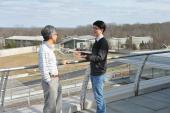
Visitors: Sacha Nelson (Professor, Brandeis University) and Ken Sugino (Research Associate, Brandeis University)
Hosts: Adam Hantman (Fellow) and Sean Eddy (Group Leader)
Objective: To provide well characterized tools for the genetic analysis of mammalian cell and circuit function and to begin to understand the regulatory logic of cell type specific transcription.
Visitor: Ping Yu (Graduate Student, Southeast University Najing)
Host: Hanchuan Peng (Senior Scientist)
Objective: To help the Peng Lab assess and potentially improve some of previously developed Vaa3D-ITK code for better pipelining in the Vaa3D system for various image analysis tasks.
Visitor: Marta Zlatic (Junior Research Fellow at Trinity College, Cambridge and Visiting Fellow in Wes Grueber's Lab at Columbia University)
Host: Fly Olympiad
Objective: To identify functionally different interneurons that direct specific larval behaviors in Drosophila using the Janelia collection of GAL4 lines and an automated tracking system developed by Rex Kerr's lab at Janelia.
Visitor: Michael Zuker (Professor, Rensselaer Polytechnic Institute)
Host: Sean Eddy (Group Leader)
Objective: To develop software to analyze and predict RNA structure from primary sequence.
Visitor: Johanne Egge Rinholm (Professor, University of Oslo)
Host: David Clayton (HHMI/JFRC Lab Head)
Objective: To study the localization and mobility of mitochondria in oligodendrocytes and their myelin in the central nervous system.
Visitor: Donald Rio (Professor, University of California, Berkeley)
Host: Robert Tjian (HHMI President)
Objective: To measure the kinetics of assembly and disassembly of GTP-dependent Drosophila P element transposase-DNA complexes and to visualize GTP-dependent DNA looping catalyzed by the transposase protein by employing total internal reflection (TIRF) microscopic methods, as well as fluorescence resonance energy transfer (FRET).
Visitors: Glenn Turner (Assistant Professor, Cold Spring Harbor Laboratory) and Rob Campbell (Postdoctoral Associate, Cold Spring Harbor Laboratory)
Host: Vivek Jayaraman (Group Leader)
Objective: To study neural dynamics underlying olfactory memory in behaving (tethered flying) Drosophila by combining the Turner lab's expertise with that of the Jayaraman lab.
Visitors: Laura Wysocki (Assistant Professor, Wabash College)
Host: Luke Lavis (HHMI/JFRC Lab Head)
Objective: To collaborate primarily with Luke Lavis in the synthesis and analysis of novel compounds for use in biological research.