Dudman Lab
The function of the nervous system is to produce adaptive behaviors. The selection of a particular behavior results from attaching value to actions, events, and stimuli based on their associated outcomes.
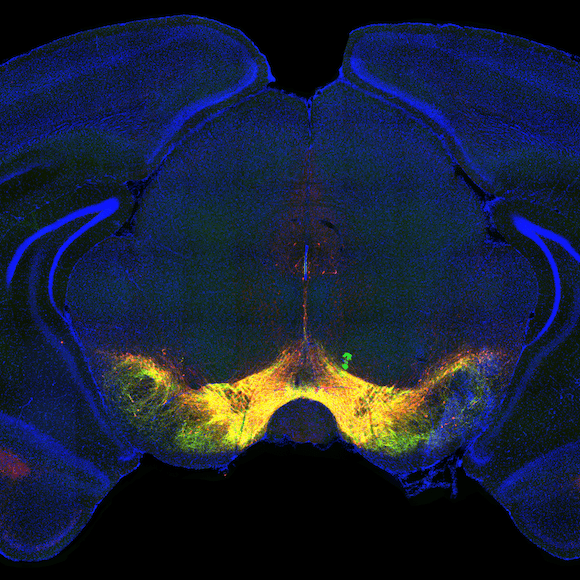
We hope to provide insights into underlying biological dysfunctions, such as those found in pathological disruptions of volitional action in Parkinson's disease and in addiction. We begin with the hypothesis that the unique biophysical properties of individual neurons endow circuits in the brain with distinct functional properties. Our lab focuses on understanding the cellular and circuit computations in the dorsolateral striatum of the mouse by focusing on two general areas of research.
Projects (2)
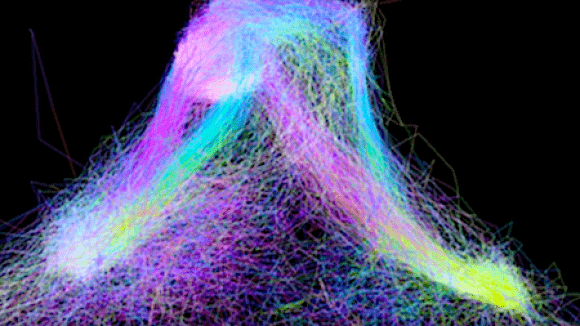
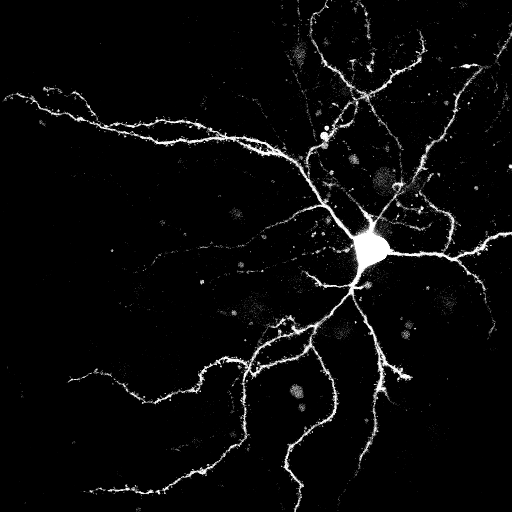
Currently we are using patch clamp electrophsiology and two photon microscopy to study the spatial and temporal determinants of dendritic integration in principle neurons of the dorsal striatum. In collaboration with other labs at Janelia Farm Research Campus we are developing genetic and chemical tools to characterize the integrative properties of striatal neurons and study the functional architecture of corticostriatal and thalamostriatal circuits. These experimental approaches are complemented by the development of computational models that both test hypotheses and generate testable predictions for future experiments.
Our long term goal is to understand how individual neurons determine the dynamics of neural activity that underly reinforcement learning. Currently, we are focusing on the development of techniques to make dense extracellular and intracellular electrophysiological recordings from awake, behaving mice. In collaboration with several groups at Janelia Farm we are drawing upon the expertise of the Instrument Design & Fabrication group to design and build custom electronics, electrodes and recording systems. We hope to contribute to a toolkit for electrophysiological recordings that will benefit the larger neuroscience community.
-
-
Joshua Dudman Lab Head
-
Jenny Brown Graduate Student
-
Yi Li Postdoctoral Associate
-
Weixing Pan Research Staff
-
Eric Yttri Postdoctoral Associate
-
Heather Davies
Janelia Publications
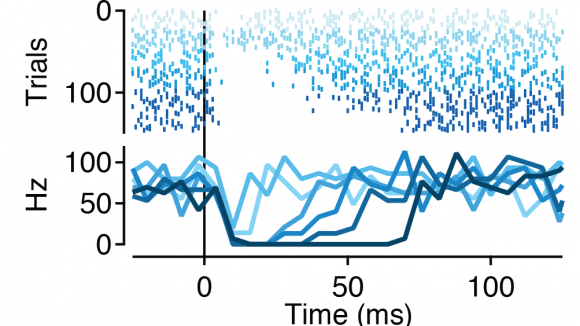
Midbrain dopaminergic (DA) neurons are thought to guide learning via phasic elevations of firing in response to reward predicting stimuli. The mechanism for these signals remains unclear. Using extracellular recording during associative learning, we found that inhibitory neurons in the ventral midbrain of mice responded to salient auditory stimuli with a burst of activity that occurred before the onset of the phasic response of DA neurons. This population of inhibitory neurons exhibited enhanced responses during extinction and was anticorrelated with the phasic response of simultaneously recorded DA neurons. Optogenetic stimulation revealed that this population was, in part, derived from inhibitory projection neurons of the substantia nigra that provide a robust monosynaptic inhibition of DA neurons. Thus, our results elaborate on the dynamic upstream circuits that shape the phasic activity of DA neurons and suggest that the inhibitory microcircuit of the midbrain is critical for new learning in extinction.
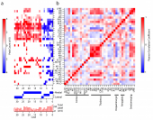
The basal ganglia play a critical role in the regulation of voluntary action in vertebrates. Our understanding of the function of the basal ganglia relies heavily upon anatomical information, but continued progress will require an understanding of the specific functional roles played by diverse cell types and their connectivity. An increasing number of mouse lines allow extensive identification, characterization, and manipulation of specified cell types in the basal ganglia. Despite the promise of genetically modified mice for elucidating the functional roles of diverse cell types, there is relatively little anatomical data obtained directly in the mouse. Here we have characterized the retrograde labeling obtained from a series of tracer injections throughout the dorsal striatum of adult mice. We found systematic variations in input along both the medial-lateral and anterior-posterior neuraxes in close agreement with canonical features of basal ganglia anatomy in the rat. In addition to the canonical features we have provided experimental support for the importance of non-canonical inputs to the striatum from the raphe nuclei and the amygdala. To look for organization at a finer scale we have analyzed the correlation structure of labeling intensity across our entire dataset. Using this analysis we found substantial local heterogeneity within the large-scale order. From this analysis we conclude that individual striatal sites receive varied combinations of cortical and thalamic input from multiple functional areas, consistent with some earlier studies in the rat that have suggested the presence of a combinatorial map.
The transformation of synaptic input into patterns of spike output is a fundamental operation that is determined by the particular complement of ion channels that a neuron expresses. Although it is well established that individual ion channel proteins make stochastic transitions between conducting and non-conducting states, most models of synaptic integration are deterministic, and relatively little is known about the functional consequences of interactions between stochastically gating ion channels. Here, we show that a model of stellate neurons from layer II of the medial entorhinal cortex implemented with either stochastic or deterministically gating ion channels can reproduce the resting membrane properties of stellate neurons, but only the stochastic version of the model can fully account for perithreshold membrane potential fluctuations and clustered patterns of spike output that are recorded from stellate neurons during depolarized states. We demonstrate that the stochastic model implements an example of a general mechanism for patterning of neuronal output through activity-dependent changes in the probability of spike firing. Unlike deterministic mechanisms that generate spike patterns through slow changes in the state of model parameters, this general stochastic mechanism does not require retention of information beyond the duration of a single spike and its associated afterhyperpolarization. Instead, clustered patterns of spikes emerge in the stochastic model of stellate neurons as a result of a transient increase in firing probability driven by activation of HCN channels during recovery from the spike afterhyperpolarization. Using this model, we infer conditions in which stochastic ion channel gating may influence firing patterns in vivo and predict consequences of modifications of HCN channel function for in vivo firing patterns.
Prior Publications (10)
Whereas recent studies have elucidated principles for representation of information within the entorhinal cortex, less is known about the molecular basis for information processing by entorhinal neurons. The HCN1 gene encodes ion channels that mediate hyperpolarization-activated currents (I(h)) that control synaptic integration and influence several forms of learning and memory. We asked whether hyperpolarization-activated, cation nonselective 1 (HCN1) channels control processing of information by stellate cells found within layer II of the entorhinal cortex. Axonal projections from these neurons form a major component of the synaptic input to the dentate gyrus of the hippocampus. To determine whether HCN1 channels control either the resting or the active properties of stellate neurons, we performed whole-cell recordings in horizontal brain slices prepared from adult wild-type and HCN1 knock-out mice. We found that HCN1 channels are required for rapid and full activation of hyperpolarization-activated currents in stellate neurons. HCN1 channels dominate the membrane conductance at rest, are not required for theta frequency (4-12 Hz) membrane potential fluctuations, but suppress low-frequency (<4 Hz) components of spontaneous and evoked membrane potential activity. During sustained activation of stellate cells sufficient for firing of repeated action potentials, HCN1 channels control the pattern of spike output by promoting recovery of the spike afterhyperpolarization. These data suggest that HCN1 channels expressed by stellate neurons in layer II of the entorhinal cortex are key molecular components in the processing of inputs to the hippocampal dentate gyrus, with distinct integrative roles during resting and active states.
HCN1 hyperpolarization-activated cation channels act as an inhibitory constraint of both spatial learning and synaptic integration and long-term plasticity in the distal dendrites of hippocampal CA1 pyramidal neurons. However, as HCN1 channels provide an excitatory current, the mechanism of their inhibitory action remains unclear. Here we report that HCN1 channels also constrain CA1 distal dendritic Ca2+ spikes, which have been implicated in the induction of LTP at distal excitatory synapses. Our experimental and computational results indicate that HCN1 channels provide both an active shunt conductance that decreases the temporal integration of distal EPSPs and a tonic depolarizing current that increases resting inactivation of T-type and N-type voltage-gated Ca2+ channels, which contribute to the Ca2+ spikes. This dual mechanism may provide a general means by which HCN channels regulate dendritic excitability.
Persistent neural activity that outlasts an initial stimulus is thought to provide a mechanism for the transient storage of memory. In this issue of Neuron, Fransén et al. identify important principles for a cell-autonomous mechanism of graded persistent firing using an elegant combination of experimental and computational approaches.
Ligand-gated ion channels involved in the modulation of synaptic strength are the AMPA, kainate, and NMDA glutamate receptors. Small molecules that potentiate AMPA receptor currents relieve cognitive deficits caused by neurodegenerative diseases such as Alzheimer's disease and show promise in the treatment of depression. Previously, there has been limited understanding of the molecular mechanism of action for AMPA receptor potentiators. Here we present cocrystal structures of the glutamate receptor GluR2 S1S2 ligand-binding domain in complex with aniracetam [1-(4-methoxybenzoyl)-2-pyrrolidinone] or CX614 (pyrrolidino-1,3-oxazino benzo-1,4-dioxan-10-one), two AMPA receptor potentiators that preferentially slow AMPA receptor deactivation. Both potentiators bind within the dimer interface of the nondesensitized receptor at a common site located on the twofold axis of molecular symmetry. Importantly, the potentiator binding site is adjacent to the "hinge" in the ligand-binding core "clamshell" that undergoes conformational rearrangement after glutamate binding. Using rapid solution exchange, patch-clamp electrophysiology experiments, we show that point mutations of residues that interact with potentiators in the cocrystal disrupt potentiator function. We suggest that the potentiators slow deactivation by stabilizing the clamshell in its closed-cleft, glutamate-bound conformation.
Molecular adaptations are believed to contribute to the mechanism of action of antipsychotic drugs (APDs). We attempted to establish common gene regulation patterns induced by chronic treatment with APDs.
Responses to threat-related stimuli are influenced by conscious and unconscious processes, but the neural systems underlying these processes and their relationship to anxiety have not been clearly delineated. Using fMRI, we investigated the neural responses associated with the conscious and unconscious (backwardly masked) perception of fearful faces in healthy volunteers who varied in threat sensitivity (Spielberger trait anxiety scale). Unconscious processing modulated activity only in the basolateral subregion of the amygdala, while conscious processing modulated activity only in the dorsal amygdala (containing the central nucleus). Whereas activation of the dorsal amygdala by conscious stimuli was consistent across subjects and independent of trait anxiety, activity in the basolateral amygdala to unconscious stimuli, and subjects' reaction times, were predicted by individual differences in trait anxiety. These findings provide a biological basis for the unconscious emotional vigilance characteristic of anxiety and a means for investigating the mechanisms and efficacy of treatments for anxiety.
Dopamine (DA) receptor-mediated signal transduction and gene expression play a central role in many brain disorders from schizophrenia to Parkinson's disease to addiction. While trying to evaluate the role of L-type Ca2+ channels in dopamine D1 receptor-mediated phosphorylation of the transcription factor cyclic AMP response element-binding protein (CREB), we found that activation of dopamine D1 receptors alters the properties of L-type Ca2+ channel inhibitors and turns them into facilitators of Ca2+ influx. In D1 receptor-stimulated neurons, L-type Ca2+ channel blockers promote cytosolic Ca2+ accumulation. This leads to the activation of a molecular signal transduction pathway and CREB phosphorylation. In the absence of dopamine receptor stimulation, L-type Ca2+ channel blockers inhibit CREB phosphorylation. The effect of dopamine on L-type Ca2+ channel blockers is dependent on protein kinase A (PKA), suggesting that protein phosphorylation plays a role in this phenomenon. Because of the adverse effect of activated dopamine receptors on L-type Ca2+ channel blocker action, the role of L-type Ca2+ channels in the dopamine D1 receptor signal transduction pathway cannot be assessed with pharmacological tools. However, with antisense technology, we demonstrate that L-type Ca2+ channels contribute to D1 receptor-mediated CREB phosphorylation. We conclude that the D1 receptor signal transduction pathway depends on L-type Ca2+ channels to mediate CREB phosphorylation.
Enkephalin modulates striatal function, thereby affecting motor performance and addictive behaviors. The proenkephalin gene is also used as a model to study cyclic AMP-mediated gene expression in striatal neurons. The second messenger pathway leading to proenkephalin expression demonstrates how cyclic AMP pathways are synchronized with depolarization. We show that cyclic AMP-mediated regulation of the proenkephalin gene is dependent on the activity of L-type Ca2+ channels. Inhibition of L-type Ca2+ channels blocks forskolin-mediated induction of proenkephalin. The Ca2+-activated kinase, Ca2+/calmodulin kinase, as well as the cyclic AMP-activated kinase, protein kinase A (PKA), are both necessary for the induction of the proenkephalin promoter. Similarly, both kinases are needed for the L-type Ca2+ channel-mediated induction of proenkephalin. This synchronization of second messenger pathways provides a coincidence mechanism that gates proenkephalin synthesis in striatal neurons, ensuring that levels are increased only in the presence of activated PKA and depolarization.
In contrast to our increasingly detailed understanding of how synaptic plasticity provides a cellular substrate for learning and memory, it is less clear how a neuron's voltage-gated ion channels interact with plastic changes in synaptic strength to influence behavior. We find, using generalized and regional knockout mice, that deletion of the HCN1 channel causes profound motor learning and memory deficits in swimming and rotarod tasks. In cerebellar Purkinje cells, which are a key component of the cerebellar circuit for learning of correctly timed movements, HCN1 mediates an inward current that stabilizes the integrative properties of Purkinje cells and ensures that their input-output function is independent of the previous history of their activity. We suggest that this nonsynaptic integrative function of HCN1 is required for accurate decoding of input patterns and thereby enables synaptic plasticity to appropriately influence the performance of motor activity.
Addictive drugs such as amphetamine and cocaine stimulate the dopaminergic system, activate dopamine receptors and induce gene expression throughout the striatum. The signal transduction pathway leading from dopamine receptor stimulation at the synapse to gene expression in the nucleus has not been fully elucidated. Here, we present evidence that D1 receptor stimulation leads to phosphorylation of the transcription factor Ca2+ and cyclic AMP response element binding protein (CREB) in the nucleus by means of NMDA receptor-mediated Ca2+ signaling. Stimulation of D1 receptors induces the phosphorylation of Ser897 on the NR1 subunit by protein kinase A (PKA). This phosphorylation event is crucial for D1 receptor-mediated CREB phosphorylation. Dopamine cannot induce CRE-mediated gene expression in neurons transfected with a phosphorylation-deficient NR1 construct. Moreover, stimulation of D1 receptors or increase in cyclic AMP levels leads to an increase in cytosolic Ca2+ in the presence of glutamate, but not in the absence of glutamate, indicating the ability of dopamine and cyclic AMP to facilitate NMDA channel activity. The recruitment of the NMDA receptor signal transduction pathway by D1 receptors may provide a general mechanism for gene regulation that is fundamental for mechanisms of drug addiction and long-term memory.