Jayaraman Lab
Our lab is interested in establishing causal links between the dynamics of neural circuits and the behavioral decisions that an animal continuously makes as it navigates a multi-sensory world. We aim to uncover general principles about the neural representation of sensorimotor states and the functional organization and operation of small neural circuits. We use the powerful genetic model organism, Drosophila melanogaster, for our experiments, and work in close collaboration with several others at Janelia Farm. We have developed experimental tools to record neural activity in tethered walking and flying flies during behavior. We recently used these tools to find that neurons in an early visual area of the fly (the optic lobe) change their gain and even their tuning depending on the fly's behavioral state. We are now using a combination of two-photon imaging, electrophysiology, quantitative behavior, optogenetics and various computational techniques in our attempt to mechanistically link computation in sensorimotor circuits to the fly's adaptive behavioral decisions.
How is information from single and multiple sensory streams processed in the brain to enable an organism to produce appropriate motor responses? What cellular and network mechanisms underlie behavioral changes in response to reward and punishment associated with some sensorimotor decisions? We believe that exploring such issues requires studying neural activity in a behaving organism. Furthermore, validating any potential answers requires manipulating neural circuits in precise and well-controlled ways. This leads us to our experimental system, the fruit fly (or, more accurately, the vinegar fly), Drosophila melanogaster, which has long been the organism of choice for behavioral genetics and comes with tools to fluorescently label, manipulate the activity of, and optically record from genetically targeted neurons.
We use electrophysiology and two-photon imaging (often simultaneously) to record from somata and dendrites of genetically identified neurons. For electrophysiology, we use visually guided whole-cell patch clamp, cell-attached and extracellular multi-single-unit techniques to record from labeled neurons. For optical imaging, we use recently developed genetically encoded sensors developed by Loren Looger's lab and the GENIE team. The advantage of such sensors is that the same genetically identified neurons and their fine processes can be targeted for imaging in fly after fly. We work in close collaboration with Michael Reiser's, Gerry Rubin's, Julie Simpson's, and Gwyneth Card's labs, and with Tim Harris's Applied Physics and Instrumentation Group. We also benefit from our interactions with many others at Janelia, including Karel Svoboda, Alla Karpova, Parvez Ahammad, Anthony Leonardo, Stefan Pulver, Stephen Huston, Josh Dudman, and Gabe Murphy. Our work is also powered by the wonderful support we get from Janelia's Shared Resources, in particular members of Instrumentation Design & Fabrication, and Fly Core. With a combination of electrophysiological and optical recordings, quantitative behavior, and a variety of computational techniques, we are exploring how sensory and motor information is integrated and used to determine action in the tethered fly's brain.
Establishing causal links between multimodal and pre-motor computations of neuronal ensembles and the fly's online decision-making behavior is a long-term goal for our lab. Along the way, we hope to discover some general principles about sensorimotor representations, neural computation, and the functional organization and operation of small circuits.
Two broad and related lines of research in our lab concern:
Projects (2)
This effort involves using genetic, electrophysiological, imaging and behavioral techniques to establish functional connectivity and to map circuits of interest. Our main focus is on an intriguing structure of the fly brain called the central complex. This structure, which is found in all insects, consists of four interconnected and stereotypical neuropillar sub-regions. We are able to target different sub-regions of the central complex by taking advantage of the highly restrictive expression patterns of selected Gal4 lines, many of which are generated and catalogued locally in Gerry Rubin's lab. Based mainly on data from behavioral genetics experiments in Drosophila and electrophysiology in other insects (the locust and cockroach), the central complex is thought to subserve multi-sensory and motor control functions. We are attempting to further elucidate the workings of this deep area of the brain by adding physiology to the mix.
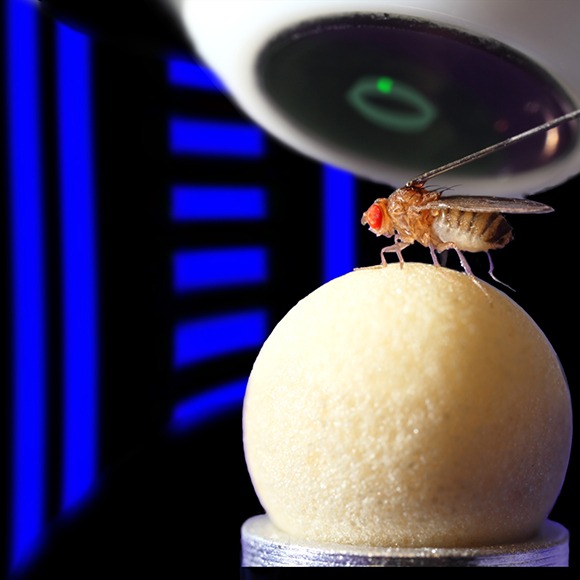
In collaboration with Michael Reiser's lab and Janelia's Instrumentation Design and Fabrication group, we have developed techniques to perform electrophysiological and optical recordings in a tethered, behaving fly that is walking on an air-supported ball or flying inside a virtual reality arena. The movement of the ball or wings is tracked with high fidelity and temporal resolution, allowing us to infer the fly's intended movements. We are using this setup to correlate neural activity with both the sensory information presented to the fly and its motor output. We hope that such experiments will allow us to better understand computations carried out by neurons in different parts of the central complex during both ethologically relevant and more artificial behavioral paradigms. Computational analysis and modeling are also key components of our effort to uncover the function of this circuit.
-
-
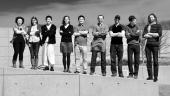
Vivek Jayaraman Lab Head
-
Johannes Seelig Research Staff
-
Romain Franconville Postdoctoral Associate
-
Chuntao Dan Research Staff
-
Sung Soo Kim Postdoctoral Associate
-
Sharon Kearney
Friends & Alumni Groups
Tom Adelman
Philip Coen
Johnny Hu
Jessie Kanwal
Gus K. Lott
Stanley Heinze (May-June, 2008)
Misha Ahrens (Nov 2008 - June 2009)
Janelia Publications
The visual neurons of many animals process sensory input differently depending on the animal's state of locomotion. Now, new work in Drosophila melanogaster shows that neuromodulatory neurons active during flight boost responses of neurons in the visual system.
Sensorimotor integration is a field rich in theory backed by a large body of psychophysical evidence. Relating the underlying neural circuitry to these theories has, however, been more challenging. With a wide array of complex behaviors coordinated by their small brains, insects provide powerful model systems to study key features of sensorimotor integration at a mechanistic level. Insect neural circuits perform both hard-wired and learned sensorimotor transformations. They modulate their neural processing based on both internal variables, such as the animal's behavioral state, and external ones, such as the time of day. Here we present some studies using insect model systems that have produced insights, at the level of individual neurons, about sensorimotor integration and the various ways in which it can be modified by context.
Changes in behavioral state modify neural activity in many systems. In some vertebrates such modulation has been observed and interpreted in the context of attention and sensorimotor coordinate transformations. Here we report state-dependent activity modulations during walking in a visual-motor pathway of Drosophila. We used two-photon imaging to monitor intracellular calcium activity in motion-sensitive lobula plate tangential cells (LPTCs) in head-fixed Drosophila walking on an air-supported ball. Cells of the horizontal system (HS)--a subgroup of LPTCs--showed stronger calcium transients in response to visual motion when flies were walking rather than resting. The amplified responses were also correlated with walking speed. Moreover, HS neurons showed a relatively higher gain in response strength at higher temporal frequencies, and their optimum temporal frequency was shifted toward higher motion speeds. Walking-dependent modulation of HS neurons in the Drosophila visual system may constitute a mechanism to facilitate processing of higher image speeds in behavioral contexts where these speeds of visual motion are relevant for course stabilization.
Drosophila melanogaster is a model organism rich in genetic tools to manipulate and identify neural circuits involved in specific behaviors. Here we present a technique for two-photon calcium imaging in the central brain of head-fixed Drosophila walking on an air-supported ball. The ball's motion is tracked at high resolution and can be treated as a proxy for the fly's own movements. We used the genetically encoded calcium sensor, GCaMP3.0, to record from important elements of the motion-processing pathway, the horizontal-system lobula plate tangential cells (LPTCs) in the fly optic lobe. We presented motion stimuli to the tethered fly and found that calcium transients in horizontal-system neurons correlated with robust optomotor behavior during walking. Our technique allows both behavior and physiology in identified neurons to be monitored in a genetic model organism with an extensive repertoire of walking behaviors.
Genetically encoded calcium indicators (GECIs) can be used to image activity in defined neuronal populations. However, current GECIs produce inferior signals compared to synthetic indicators and recording electrodes, precluding detection of low firing rates. We developed a single-wavelength GCaMP2-based GECI (GCaMP3), with increased baseline fluorescence (3-fold), increased dynamic range (3-fold) and higher affinity for calcium (1.3-fold). We detected GCaMP3 fluorescence changes triggered by single action potentials in pyramidal cell dendrites, with signal-to-noise ratio and photostability substantially better than those of GCaMP2, D3cpVenus and TN-XXL. In Caenorhabditis elegans chemosensory neurons and the Drosophila melanogaster antennal lobe, sensory stimulation-evoked fluorescence responses were significantly enhanced with GCaMP3 (4-6-fold). In somatosensory and motor cortical neurons in the intact mouse, GCaMP3 detected calcium transients with amplitudes linearly dependent on action potential number. Long-term imaging in the motor cortex of behaving mice revealed large fluorescence changes in imaged neurons over months.
Prior Publications (4)
Genetically encoded optical indicators hold the promise of enabling non-invasive monitoring of activity in identified neurons in behaving organisms. However, the interpretation of images of brain activity produced using such sensors is not straightforward. Several recent studies of sensory coding used G-CaMP 1.3-a calcium sensor-as an indicator of neural activity; some of these studies characterized the imaged neurons as having narrow tuning curves, a conclusion not always supported by parallel electrophysiological studies. To better understand the possible cause of these conflicting results, we performed simultaneous in vivo 2-photon imaging and electrophysiological recording of G-CaMP 1.3 expressing neurons in the antennal lobe (AL) of intact fruitflies. We find that G-CaMP has a relatively high threshold, that its signal often fails to capture spiking response kinetics, and that it can miss even high instantaneous rates of activity if those are not sustained. While G-CaMP can be misleading, it is clearly useful for the identification of promising neural targets: when electrical activity is well above the sensor's detection threshold, its signal is fairly well correlated with mean firing rate and G-CaMP does not appear to alter significantly the responses of neurons that express it. The methods we present should enable any genetically encoded sensor, activator, or silencer to be evaluated in an intact neural circuit in vivo in Drosophila.
Odors evoke complex responses in locust antennal lobe projection neurons (PNs)-the mitral cell analogs. These patterns evolve over hundreds of milliseconds and contain information about odor identity and concentration. In nature, animals often encounter many odorants in short temporal succession. We explored the effects of such conditions by presenting two different odors with variable intervening delays. PN ensemble representations tracked stimulus changes and, in some delay conditions, reached states that corresponded neither to the representation of either odor alone nor to the static mixture of the two. We then recorded from Kenyon cells (KCs), the PNs' targets. Their responses were consistent with the PN population's behavior: in some conditions, KCs were recruited that did not fire during single-odor or mixture stimuli. Thus, PN population dynamics are history dependent, and responses of individual KCs are consistent with piecewise temporal decoding of PN output over large sections of the PN population.
We examined the encoding and decoding of odor identity and intensity by neurons in the antennal lobe and the mushroom body, first and second relays, respectively, of the locust olfactory system. Increased odor concentration led to changes in the firing patterns of individual antennal lobe projection neurons (PNs), similar to those caused by changes in odor identity, thus potentially confounding representations for identity and concentration. However, when these time-varying responses were examined across many PNs, concentration-specific patterns clustered by identity, resolving the apparent confound. This is because PN ensemble representations changed relatively continuously over a range of concentrations of each odorant. The PNs' targets in the mushroom body-Kenyon cells (KCs)-had sparse identity-specific responses with diverse degrees of concentration invariance. The tuning of KCs to identity and concentration and the patterning of their responses are consistent with piecewise decoding of their PN inputs over oscillation-cycle length epochs.
FlyFizz is an evolving webspace dedicated to enabling the exchange of information relating to one growing subfield of Drosophila brain physiology: understanding how neural circuits generate behavior by applying electrophysiological and optical imaging techniques, particularly in behaving flies. We hope this space will become a repository for supplemental information regarding published techniques, as well as a community forum for discussion, software distribution and job postings.
Frank Midgley (Janelia Scientific Computing) worked with Vivek Jayaraman, Mitya Chklovskii and others at Janelia on this freely available software tool for neural circuit visualization. It allows users to dynamically represent connectivity and information flow at different levels of a nervous system, and can also serve as a front-end for storage of other types of data (e.g., physiological or anatomical). More information available at: Neuroptikon.org
Janelia Positions
Studying sensorimotor integration using physiology in a behaving fly
We are interested in the neural algorithms and circuit computations underlying adaptive, sensory-driven orienting behavior. Thanks to their relative simplicity, and the vast array of genetic tools constantly developed for them, flies offer an opportunity unlike any other when it comes to taking interesting phenomenology to a mechanistic level. Projects in this area involve developing a rigorous quantitative behavioral paradigm in a tethered walking or flying fly, and then studying circuits (we have a particular interest in the central complex) underlying the behavior in a virtual environment on the rig in a walking and/or flying fly. You would use some combination of intracellular recordings (whole-cell patch clamp), two-photon imaging with genetically encoded calcium indicators (e.g., GCaMP5.0 and newer sensors under development at Janelia), and custom microprobes that allow multi-single-unit extracellular recordings from identified neural populations in the fly brain. Your research would be both experimental and computational, and your track record should ideally reflect your ability and creativity in both areas. You would collaborate closely with others within the lab and outside (e.g., Michael Reiser's lab and APIG).
Requirements:
(i) PhD in neuroscience, biophysics or a related area (if you have a PhD in a different field, but have excellent experimental and/or quantitative skills, you should still apply)
(ii) Experience in electrophysiology and/or two-photon imaging
(iii) Strong quantitative background
(iv) High comfort level with instrumentation
Big plusses would be:
(i) A passion for designing and/or tinkering with mechanical and electrical devices
(ii) Proficiency in scientific programming (e.g., experience with MATLAB)
(iii) Experience with quantitative behavior
(iv) Experience working with Drosophila
(v) Experience in theory and modeling
Those with demonstrated proficiency in techniques that are most relevant for our research would be preferred, but I am fairly flexible when it comes to specific technical background (e.g., if you have a strong background in computation/theory/physics and are seriously interested in doing your own experiments, send me email). Applications will be reviewed until positions are filled (if you're seeing this on my lab page, the position is still available).
For the right person, Janelia Farm presents exciting and enabling collaborative opportunities unlike those in most academic institutions. We work closely with many other labs here, as well as Janelia's Applied Physics; Instrumentation, Scientific Computing, and Instrumentation Design; Fabrication groups. You should expect to contribute to projects in/with other labs during your stay here, and, you will, in turn, benefit from the participation of those in other labs in your projects.
If you think you would enjoy working in such an atmosphere, or want to know more, contact me.
Please include your curriculum vitae and research interests, and arrange for three letters of reference to be sent to:
Vivek Jayaraman
Janelia Farm Research Campus
Howard Hughes Medical Institute
19700 Helix Drive
Ashburn, VA 20147
If you have specific salary requirements, please include them in your e-mail; all information is confidential. HHMI is an equal opportunity employer.
Identifying network and cellular mechanisms underlying sensorimotor activity patterns in the central complex
You would use the latest tools in optogenetics, intracellular electrophysiology and two-photon imaging to reveal the mechanistic underpinnings of circuit dynamics in this intriguing sensorimotor integration center. Our eventual goal is to systematically characterize the functional structure of the central complex and the physiology of its neurons, and to relate the two. You would work with others within the lab to understand the network, cellular and synaptic properties that contribute to the observed response properties of neurons during behavior, and potentially work with other labs on different biological and technical aspects (e.g., Gerry Rubin, Josh Dudman, Gabe Murphy, Jeff Magee, and Loren Looger's labs).
This project is ideal for someone with an interest in the cellular and circuit mechanisms underlying neuronal activity, and a passion for doing careful cellular and synaptic physiology in a brain region important for complex adaptive behavior in insects.
Requirements:
(i) PhD in neuroscience, biophysics or a related area
(ii) Demonstrated expertise and experience in whole-cell patch clamp recording (a synaptic physiology background would be ideal)
(iii) Strong quantitative background
(iv) Solid skills in experimental design
Big plusses would be:
(i) Significant experience in neuroanatomy
(ii) Expertise in two-photon calcium imaging
(iii) Proficiency in scientific programming (e.g., experience with MATLAB)
Those with demonstrated proficiency in techniques that are most relevant for our research would be preferred. Applications will be reviewed until positions are filled (if you see this on my lab page, there is a position available).
For the right person, Janelia Farm presents exciting and enabling collaborative opportunities unlike those in most academic institutions. We work closely with many other labs here, as well as Janelia’s Applied Physics; Instrumentation, Scientific Computing, and Instrumentation Design; Fabrication groups. You should expect to contribute to projects in/with other labs during your stay here, and, you will, in turn, benefit from the participation of those in other labs in your projects.
If you think you would enjoy working in such an atmosphere, or want to know more, send me an email. Please include your curriculum vitae and research interests, and arrange for three letters of reference to be sent to:
Vivek Jayaraman
Janelia Farm Research Campus
Howard Hughes Medical Institute
19700 Helix Drive
Ashburn, VA 20147
If you have specific salary requirements, please include them in your e-mail; all information is confidential. HHMI is an equal opportunity employer.
If you are interested in the Janelia Graduate Program, or if you are at Johns Hopkins and would like to do a summer rotation in my lab, you will find helpful information here.
If you have specific salary requirements, please include them in your e-mail; all information is confidential. HHMI is an equal opportunity employer.
If you are an undergraduate student interested in working here for a few months, try the Janelia Summer program.
There may also be openings in technical groups we work closely with, for example the excellent Scientific Computing and Instrumentation Design groups. They often have interesting positions open for neuro/bio-focused engineers (/technically-focused neuroscientists/biologists).
If you have specific salary requirements, please include them in your e-mail; all information is confidential. HHMI is an equal opportunity employer.
March 3-6, 2012 - Insect Vision: Cells, Computation & Behavior
Organizers: Tom Clandinin, Karin Nordström, Michael Reiser