Betzig Lab

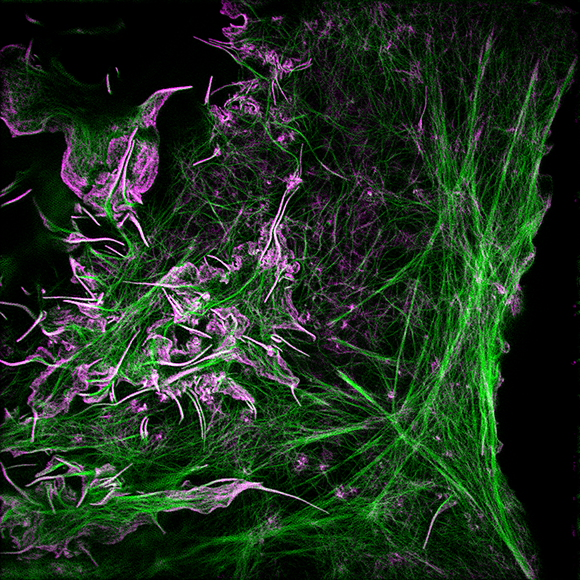
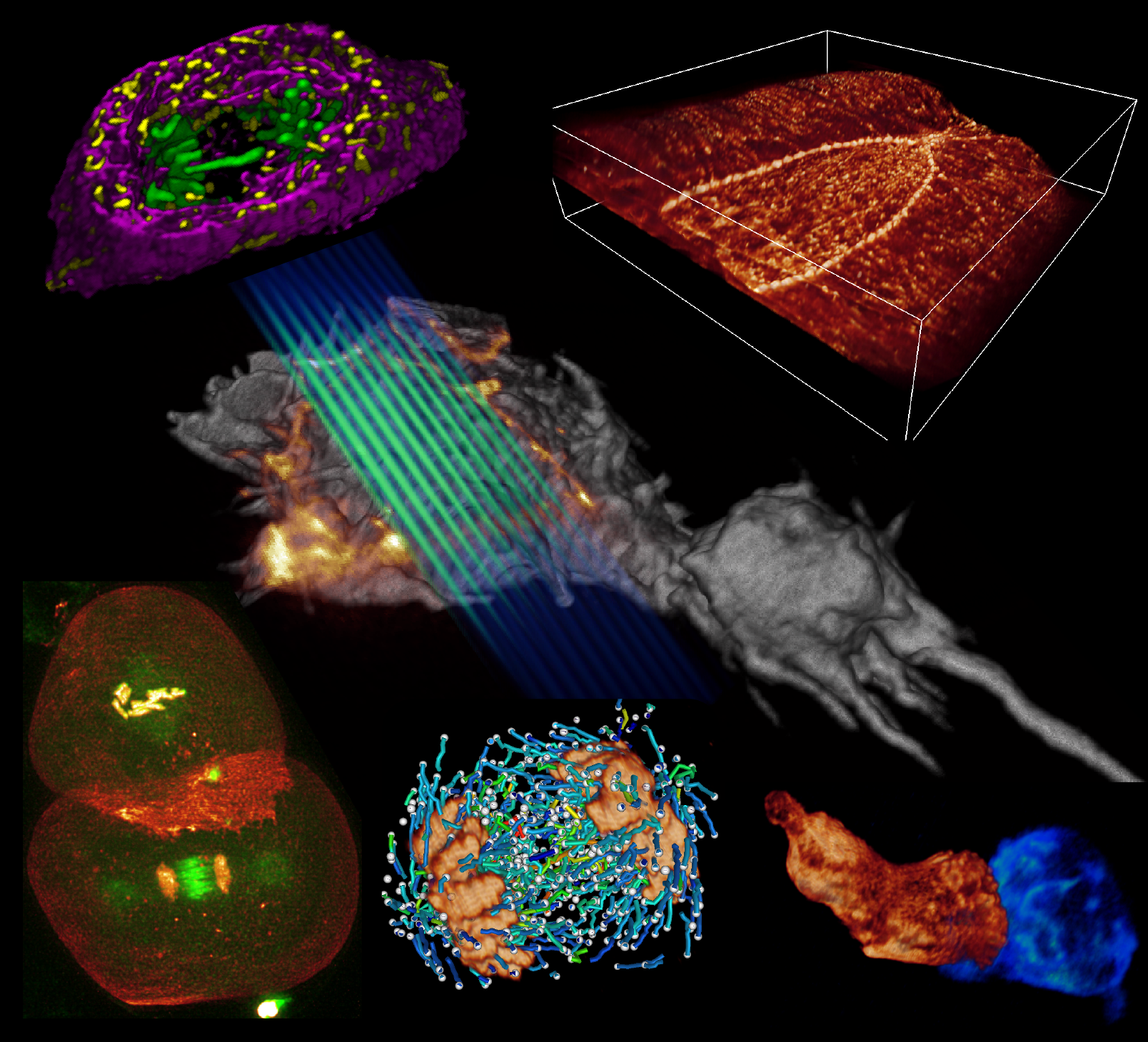
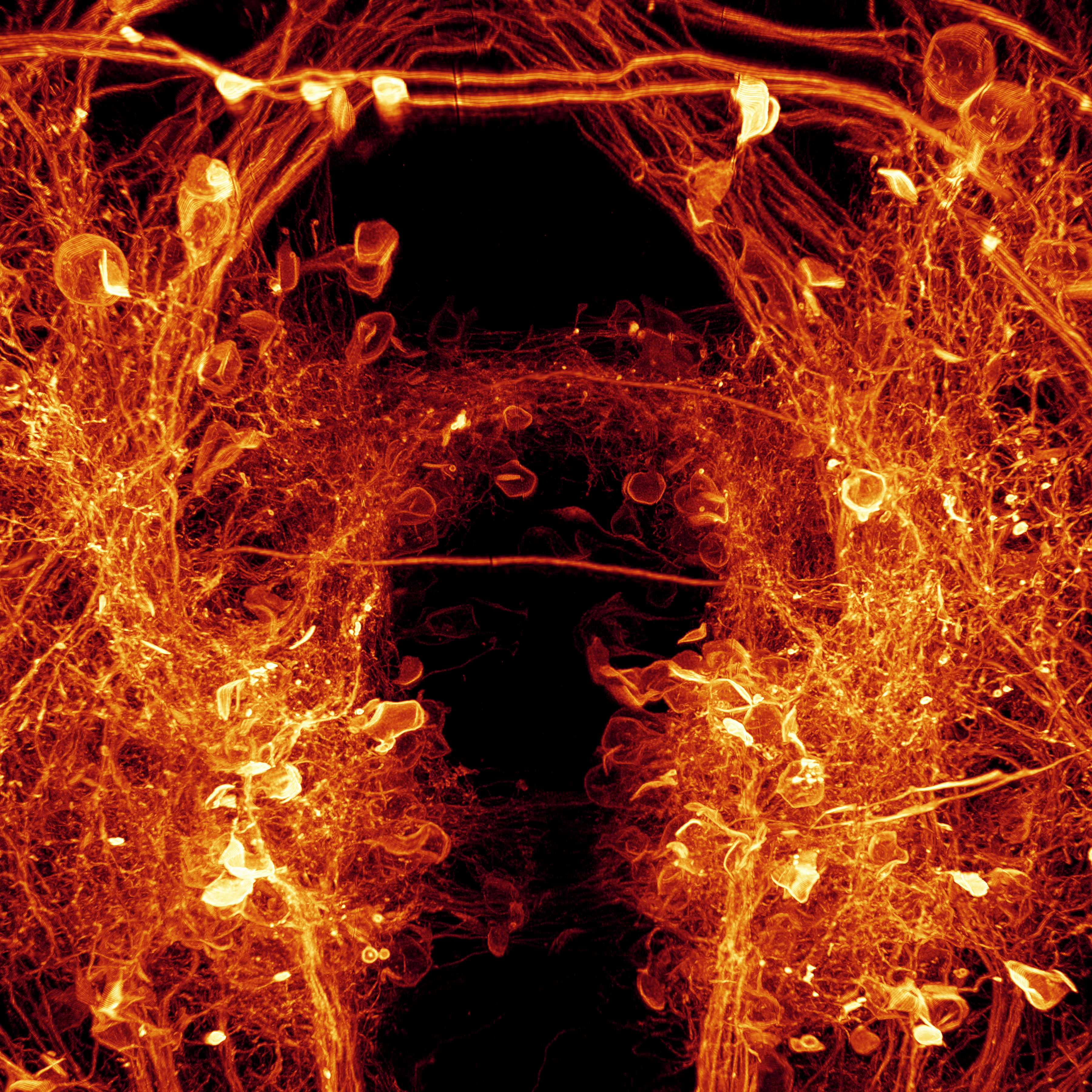
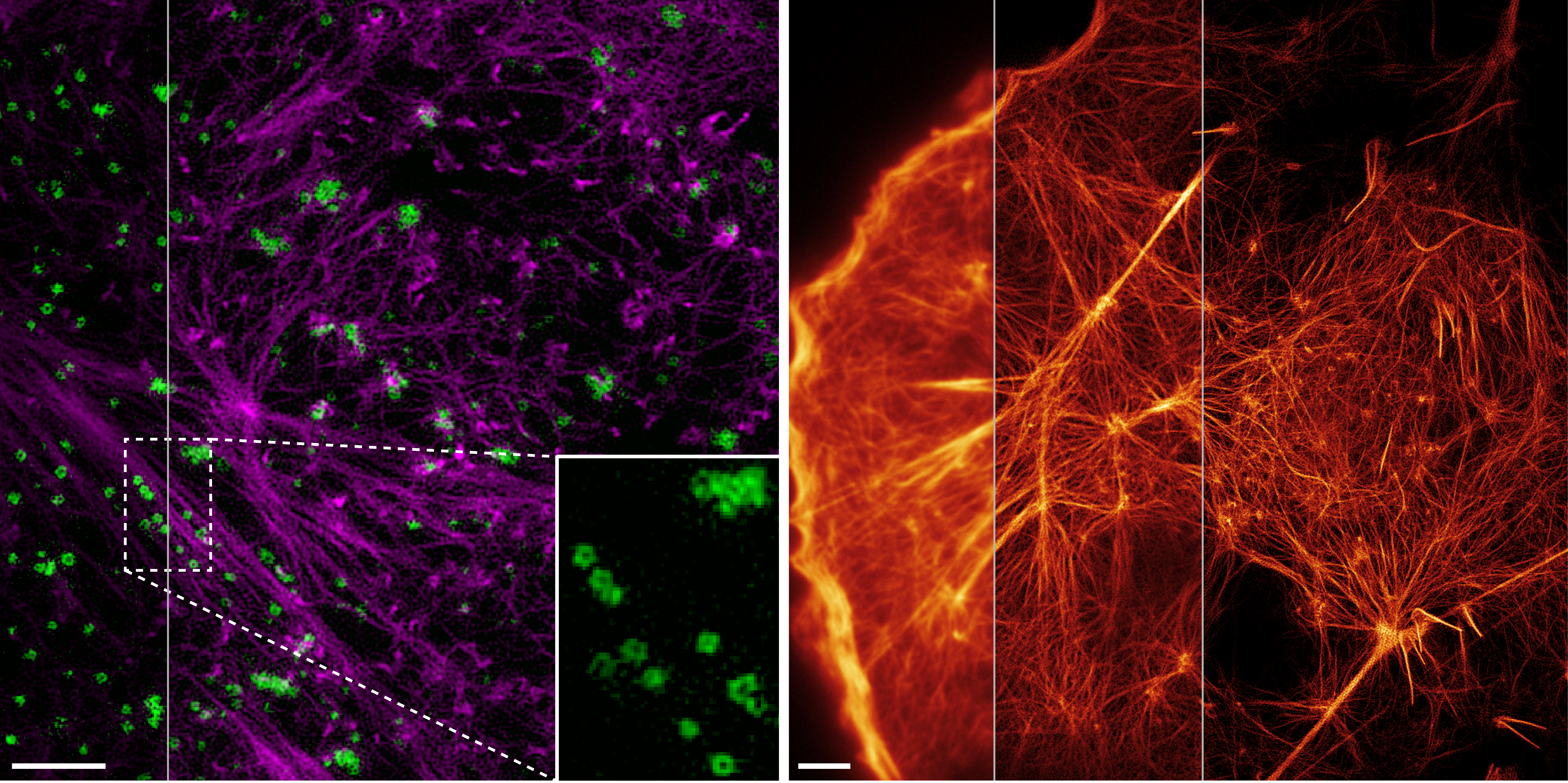
Bioimaging technologies developed in our lab: superresolution photoactivated localization microscopy (PALM); pulse splitters for mediation of nonlinear photodamage; Bessel beam plane illumination for rapid three-dimensional live cell imaging; and adaptive optics for deep tissue imaging.
Due to its comparatively benign effect on living systems, optical microscopy has been the workhorse for studies of structure and function at the cellular level and below for hundreds of years. Many questions at the forefront of molecular, cellular, and neurobiology remain beyond its current capabilities. In our group, we collaborate with scientists and engineers across disciplines to extend these capabilities in ways that we hope can be readily adopted by biologists at Janelia and elsewhere. The challenges of optical bioimaging, and hence the scope of our efforts, can be broken into four areas:
Projects (4)
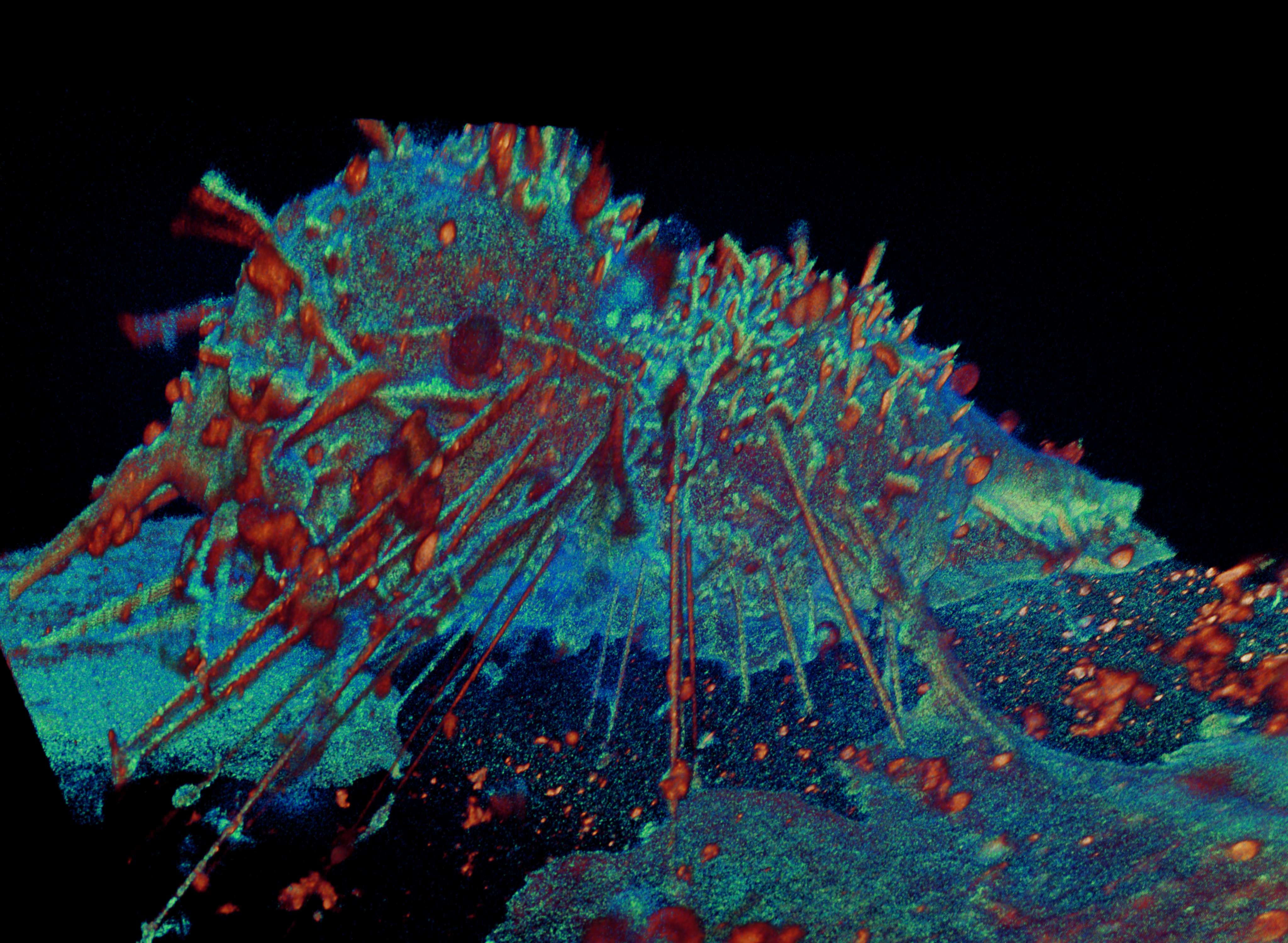
Although many methods exist to image fixed, frozen, or sectioned cells at high resolution, fluorescence microscopy is unique in its ability to study the dynamics of specific target proteins and organelles within living cells. However, since cells evolve in three dimensions, a key challenge is how to image fast enough to follow this evolution continuously in time throughout the entire cellular volume. In my lab, we have developed a variant of plane illumination microscopy that uses scanned Bessel beams to image living cells with 3D isotropic resolution at hundreds of image frames per second.
For high speed 3D imaging in scattering tissues, my colleague Na Ji and I have developed another technology, the passive pulse splitter -- a self-contained unit that, when placed in the path of an ultrafast laser, can increase the pulse repetition rate, and hence the imaging speed, by more than a hundred-fold. Potential applications include high throughput anatomical mapping of neural circuits or rapid functional imaging of activity in neural populations.
Sadly, even optical microscopy is somewhat invasive: extended imaging of living cells or tissues often leads to light-induced damage. Furthermore, in fluorescence microscopy, every sample contains a finite number of fluorescent molecules, each of which will emit a finite number of photons before irrevocably bleaching. In other words, every fluorescent sample has a finite photon budget. As spatiotemporal resolution improves, it becomes imperative to devise methods that use this budget efficiently. By confining the light excitation to a plane of submicron thickness, our Bessel beam plane illumination microscope substantially reduces photobleaching and phototoxicity compared to popular epi-illumination techniques (e.g., widefield or confocal microscopy), thereby permitting hundreds of 3D image stacks encompassing tens of thousands of image frames to be acquired from a single living cell.
The high peak excitation intensity required in nonlinear optical imaging methods, such as two photon fluorescence microscopy, can also lead to significant photodamage. Together, Na, I, and our colleague Jeff Magee have shown that our pulse splitter, when used with N-fold splitting and N1/2 higher average laser power, produces the same signal level as a two photon system without splitting, but with up to nine-fold less photobleaching in vivo and a six- to twenty-fold reduction in the rate of photodamage during calcium recording of neural activity in acute brain slices.
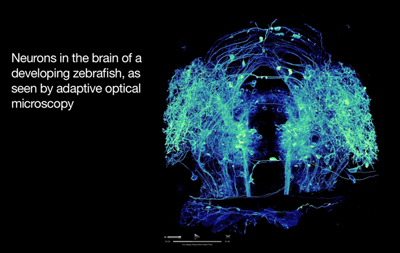
Optical microscopes achieve diffraction-limited performance only when imaging through the immersion medium for which they are designed – usually water in the case of in vivo imaging. However, nearly all biological specimens larger than a single cell are rife with refractive index inhomogeneities. As a result, many biologists do not approach the level of spatial resolution in their images that they might assume. Similar problems, confronted by astronomers when imaging through Earth’s turbulent atmosphere, have long been addressed by using adaptive optics. Motivated by their success, Na Ji and I have developed an approach for adaptive optics suited to the constraints of biological microscopy. Using the approach, we can recover near-diffraction-limited performance in a variety of specimens, including those exhibiting large amplitude and/or spatially complex aberrations.
-
-
Eric Betzig Lab Head
-
Bi-Chang Chen Postdoctoral Associate
-
Dong Li Postdoctoral Associate
-
Liang Gao Postdoctoral Associate
-
Wesley Legant Postdoctoral Associate
-
Lin Shao Research Staff
-
Kai Wang
-
Kerry Sobieski
Thomas Planchon
Janelia Publications
The signal and resolution during in vivo imaging of the mouse brain is limited by sample-induced optical aberrations. We find that, although the optical aberrations can vary across the sample and increase in magnitude with depth, they remain stable for hours. As a result, two-photon adaptive optics can recover diffraction-limited performance to depths of 450 μm and improve imaging quality over fields of view of hundreds of microns. Adaptive optical correction yielded fivefold signal enhancement for small neuronal structures and a threefold increase in axial resolution. The corrections allowed us to detect smaller neuronal structures at greater contrast and also improve the signal-to-noise ratio during functional Ca(2+) imaging in single neurons.
Optical aberrations deteriorate the performance of microscopes. Adaptive optics can be used to improve imaging performance via wavefront shaping. Here, we demonstrate a pupil-segmentation based adaptive optical approach with full-pupil illumination. When implemented in a two-photon fluorescence microscope, it recovers diffraction-limited performance and improves imaging signal and resolution.
Recent findings implicate alternate core promoter recognition complexes in regulating cellular differentiation. Here we report a spatial segregation of the alternative core factor TAF3, but not canonical TFIID subunits, away from the nuclear periphery, where the key myogenic gene MyoD is preferentially localized in myoblasts. This segregation is correlated with the differential occupancy of TAF3 versus TFIID at the MyoD promoter. Loss of this segregation by modulating either the intranuclear location of the MyoD gene or TAF3 protein leads to altered TAF3 occupancy at the MyoD promoter. Intriguingly, in differentiated myotubes, the MyoD gene is repositioned to the nuclear interior, where TAF3 resides. The specific high-affinity recognition of H3K4Me3 by the TAF3 PHD (plant homeodomain) finger appears to be required for the sequestration of TAF3 to the nuclear interior. We suggest that intranuclear sequestration of core transcription components and their target genes provides an additional mechanism for promoter selectivity during differentiation.
Commentary: Jie Yao in Bob Tijan's lab used a combination of confocal microscopy and dual label PALM in thin sections cut from resin-embedded cells to show that certain core transcription components and their target genes are spatially segregated in myoblasts, but not in differentiated myotubes, suggesting that such spatial segregation may play a role in guiding cellular differentiation.
A key challenge when imaging living cells is how to noninvasively extract the most spatiotemporal information possible. Unlike popular wide-field and confocal methods, plane-illumination microscopy limits excitation to the information-rich vicinity of the focal plane, providing effective optical sectioning and high speed while minimizing out-of-focus background and premature photobleaching. Here we used scanned Bessel beams in conjunction with structured illumination and/or two-photon excitation to create thinner light sheets (<0.5 μm) better suited to three-dimensional (3D) subcellular imaging. As demonstrated by imaging the dynamics of mitochondria, filopodia, membrane ruffles, intracellular vesicles and mitotic chromosomes in live cells, the microscope currently offers 3D isotropic resolution down to ∼0.3 μm, speeds up to nearly 200 image planes per second and the ability to noninvasively acquire hundreds of 3D data volumes from single living cells encompassing tens of thousands of image frames.
Commentary: Plane illumination microscopy has proven to be a powerful tool for studying multicellular organisms and their development at single cell resolution. However, the light sheets employed are usually too thick to provide much benefit for imaging organelles within single cultured cells. Here we introduce the use of scanned Bessel beams to create much thinner light sheets better suited to long-term dynamic live cell imaging. Such light sheets not only minimize photobleaching and phototoxicity at the sub-cellular level, but also provide axial resolution enhancement, yielding isotropic three dimensional spatial resolution. Numerous movies are provided to demonstrate the wealth of 4D information (x,y,x,t) that can be obtained from single living cells by the method. Besides providing an attractive alternative to spinning disk, AOD-driven, or line scan confocal microscopes for high speed live cell imaging, the Bessel microscope might serve as a valuable platform for superresolution microscopy (PALM, structured Illumination, or RESOLFT), since confinement of the excitation to the focal plane makes far better use of the limited fluorescence photon budget than does the traditional epi-illumination configuration.
Biological specimens are rife with optical inhomogeneities that seriously degrade imaging performance under all but the most ideal conditions. Measuring and then correcting for these inhomogeneities is the province of adaptive optics. Here we introduce an approach to adaptive optics in microscopy wherein the rear pupil of an objective lens is segmented into subregions, and light is directed individually to each subregion to measure, by image shift, the deflection faced by each group of rays as they emerge from the objective and travel through the specimen toward the focus. Applying our method to two-photon microscopy, we could recover near-diffraction-limited performance from a variety of biological and nonbiological samples exhibiting aberrations large or small and smoothly varying or abruptly changing. In particular, results from fixed mouse cortical slices illustrate our ability to improve signal and resolution to depths of 400 microm.
Commentary: Introduces a new, zonal approach to adaptive optics (AO) in microscopy suitable for highly inhomogeneous and/or scattering samples such as living tissue. The method is unique in its ability to handle large amplitude aberrations (>20 wavelengths), including spatially complex aberrations involving high order modes beyond the ability of most AO actuators to correct. As befitting a technique designed for in vivo fluorescence imaging, it is also photon efficient.
Although used here in conjunction with two photon microscopy to demonstrate correction deep into scattering tissue, the same principle of pupil segmentation might be profitably adapted to other point-scanning or widefield methods. For example, plane illumination microscopy of multicellular specimens is often beset by substantial aberrations, and all far-field superresolution methods are exquisitely sensitive to aberrations.
Within dendritic spines, actin is presumed to anchor receptors in the postsynaptic density and play numerous roles regulating synaptic transmission. However, the submicron dimensions of spines have hindered examination of actin dynamics within them and prevented live-cell discrimination of perisynaptic actin filaments. Using photoactivated localization microscopy, we measured movement of individual actin molecules within living spines. Velocity of single actin molecules along filaments, an index of filament polymerization rate, was highly heterogeneous within individual spines. Most strikingly, molecular velocity was elevated in discrete, well-separated foci occurring not principally at the spine tip, but in subdomains throughout the spine, including the neck. Whereas actin velocity on filaments at the synapse was substantially elevated, at the endocytic zone there was no enhanced polymerization activity. We conclude that actin subserves spatially diverse, independently regulated processes throughout spines. Perisynaptic actin forms a uniquely dynamic structure well suited for direct, active regulation of the synapse.
Commentary: A nice application of single particle tracking PALM (sptPALM), showing the flow of actin in the spines of live cultured neurons. Since 2008, the PALM in our lab has largely become a user facility, available to outside users as well as Janelians. Grad student Nick Frost in Tom Blanpied’s group at the U. of Maryland Med School visited on a number of occasions to use the PALM, with training and assistance from Hari.
The Escherichia coli chemotaxis network is a model system for biological signal processing. In E. coli, transmembrane receptors responsible for signal transduction assemble into large clusters containing several thousand proteins. These sensory clusters have been observed at cell poles and future division sites. Despite extensive study, it remains unclear how chemotaxis clusters form, what controls cluster size and density, and how the cellular location of clusters is robustly maintained in growing and dividing cells. Here, we use photoactivated localization microscopy (PALM) to map the cellular locations of three proteins central to bacterial chemotaxis (the Tar receptor, CheY, and CheW) with a precision of 15 nm. We find that cluster sizes are approximately exponentially distributed, with no characteristic cluster size. One-third of Tar receptors are part of smaller lateral clusters and not of the large polar clusters. Analysis of the relative cellular locations of 1.1 million individual proteins (from 326 cells) suggests that clusters form via stochastic self-assembly. The super-resolution PALM maps of E. coli receptors support the notion that stochastic self-assembly can create and maintain approximately periodic structures in biological membranes, without direct cytoskeletal involvement or active transport.
Commentary: Our goal as tool developers is to invent methods capable of uncovering new biological insights unobtainable by pre-existing technologies. A terrific example is given by this paper, where grad students Derek Greenfield and Ann McEvoy in Jan Liphardt’s group at Berkeley used our PALM to image the size and position distributions of chemotaxis proteins in E. Coli with unprecedented precision and sensitivity. Their analysis revealed that the cluster sizes follow a stretched exponential distribution, and the density of clusters is highest furthest away from the largest (e.g., polar) clusters. Both observations support a model for passive self-assembly rather than active cytoskeletal assembly of the chemotaxis network.
We combined photoactivated localization microscopy (PALM) with live-cell single-particle tracking to create a new method termed sptPALM. We created spatially resolved maps of single-molecule motions by imaging the membrane proteins Gag and VSVG, and obtained several orders of magnitude more trajectories per cell than traditional single-particle tracking enables. By probing distinct subsets of molecules, sptPALM can provide insight into the origins of spatial and temporal heterogeneities in membranes.
Commentary: As a stepping stone to true live cell PALM (see above), our collaborator Jennifer Lippincott-Schwartz suggested using the sparse photoactivation principle of PALM to track the nanoscale motion of thousands of individual molecules within a single living cell. Termed single particle tracking PALM (sptPALM), Jennifer’s postdocs Suliana Manley and Jen Gillette used the method in our PALM rig to create spatially resolved maps of diffusion rates in the plasma membrane of live cells. sptPALM is a powerful tool to study the active cytoskeletal or passive diffusional transport of individual molecules with far more measurements per cell than is possible without sparse photoactivation.
Key to understanding a protein's biological function is the accurate determination of its spatial distribution inside a cell. Although fluorescent protein markers allow the targeting of specific proteins with molecular precision, much of this information is lost when the resultant fusion proteins are imaged with conventional, diffraction-limited optics. In response, several imaging modalities that are capable of resolution below the diffraction limit (approximately 200 nm) have emerged. Here, both single- and dual-color superresolution imaging of biological structures using photoactivated localization microscopy (PALM) are described. The examples discussed focus on adhesion complexes: dense, protein-filled assemblies that form at the interface between cells and their substrata. A particular emphasis is placed on the instrumentation and photoactivatable fluorescent protein (PA-FP) tags necessary to achieve PALM images at approximately 20 nm resolution in 5 to 30 min in fixed cells.
Commentary: A paper spearheaded by Hari which gives a thorough description of the methods and hardware needed to successfully practice PALM, including cover slip preparation, cell transfection and fixation, drift correction with fiducials, characterization of on/off contrast ratios for different photoactivted fluorescent proteins, identifying PALM-suitable cells, and mechanical and optical components of a PALM system.
Pulsed lasers are key elements in nonlinear bioimaging techniques such as two-photon fluorescence excitation (TPE) microscopy. Typically, however, only a percent or less of the laser power available can be delivered to the sample before photoinduced damage becomes excessive. Here we describe a passive pulse splitter that converts each laser pulse into a fixed number of sub-pulses of equal energy. We applied the splitter to TPE imaging of fixed mouse brain slices labeled with GFP and show that, in different power regimes, the splitter can be used either to increase the signal rate more than 100-fold or to reduce the rate of photobleaching by over fourfold. In living specimens, the gains were even greater: a ninefold reduction in photobleaching during in vivo imaging of Caenorhabditis elegans larvae, and a six- to 20-fold decrease in the rate of photodamage during calcium imaging of rat hippocampal brain slices.
Commentary: Na Ji came to me early in her postdoc with an idea to reduce photodamage in nonlinear microscopy by splitting the pulses from an ultrafast laser into multiple subpulses of reduced energy. In six weeks, we constructed a prototype pulse splitter and obtained initial results confirming the validity of her vision. Further experiments with Jeff Magee demonstrated that the splitter could be used to increase imaging speed or reduce photodamage in two photon microscopy by one to two orders of magnitude. This project is a great example of how quickly one can react and exploit new ideas in the Janelia environment.
We demonstrate live-cell super-resolution imaging using photoactivated localization microscopy (PALM). The use of photon-tolerant cell lines in combination with the high resolution and molecular sensitivity of PALM permitted us to investigate the nanoscale dynamics within individual adhesion complexes (ACs) in living cells under physiological conditions for as long as 25 min, with half of the time spent collecting the PALM images at spatial resolutions down to approximately 60 nm and frame rates as short as 25 s. We visualized the formation of ACs and measured the fractional gain and loss of individual paxillin molecules as each AC evolved. By allowing observation of a wide variety of nanoscale dynamics, live-cell PALM provides insights into molecular assembly during the initiation, maturation and dissolution of cellular processes.
Commentary: The first example of true live cell and time lapse imaging by localization microscopy (as opposed to particle tracking), this paper uses the Nyquist criterion to establish a necessary condition for true spatial resolution based on the density of localized molecules – a condition often unmet in claims elsewhere in the superresolution literature.
By any method, higher spatiotemporal resolution requires increasing light exposure at the specimen, making noninvasive imaging increasingly difficult. Here, simultaneous differential interference contrast imaging is used to establish that cells behave physiologically before, during, and after PALM imaging. Similar controls are lacking from many supposed “live cell” superresolution demonstrations.
Neurobiological processes occur on spatiotemporal scales spanning many orders of magnitude. Greater understanding of these processes therefore demands improvements in the tools used in their study. Here we review recent efforts to enhance the speed and resolution of one such tool, fluorescence microscopy, with an eye toward its application to neurobiological problems. On the speed front, improvements in beam scanning technology, signal generation rates, and photodamage mediation are bringing us closer to the goal of real-time functional imaging of extended neural networks. With regard to resolution, emerging methods of adaptive optics may lead to diffraction-limited imaging or much deeper imaging in optically inhomogeneous tissues, and super-resolution techniques may prove a powerful adjunct to electron microscopic methods for nanometric neural circuit reconstruction.
Commentary: A brief review of recent trends in microscopy. The section “Caveats regarding the application of superresolution microscopy” was written in an effort to inject a dose of reality and caution into the unquestioning enthusiasm in the academic community for all things superresolution, covering the topics of labeling density and specificity, sample preparation artifacts, speed vs. resolution vs. photodamage, and the implications of signal-to-background for Nyquist vs. Rayleigh definitions of resolution.
Accurate determination of the relative positions of proteins within localized regions of the cell is essential for understanding their biological function. Although fluorescent fusion proteins are targeted with molecular precision, the position of these genetically expressed reporters is usually known only to the resolution of conventional optics ( approximately 200 nm). Here, we report the use of two-color photoactivated localization microscopy (PALM) to determine the ultrastructural relationship between different proteins fused to spectrally distinct photoactivatable fluorescent proteins (PA-FPs). The nonperturbative incorporation of these endogenous tags facilitates an imaging resolution in whole, fixed cells of approximately 20-30 nm at acquisition times of 5-30 min. We apply the technique to image different pairs of proteins assembled in adhesion complexes, the central attachment points between the cytoskeleton and the substrate in migrating cells. For several pairs, we find that proteins that seem colocalized when viewed by conventional optics are resolved as distinct interlocking nano-aggregates when imaged via PALM. The simplicity, minimal invasiveness, resolution, and speed of the technique all suggest its potential to directly visualize molecular interactions within cellular structures at the nanometer scale.
Commentary: Identifies the photoactivatable fluorescent proteins (PA-FPs) Dronpa and PS-CFP2 as green partners to orange-red PA-FPs such as Kaede and Eos for dual color PALM imaging. Very low crosstalk is demonstrated between the two color channels. Furthermore, since the probes are genetically expressed, they are closely bound to their target proteins and exhibit zero non-specific background. All these properties are essential to unambiguously identify regions of co-localization or separate compartmentalization at the nanoscale, as demonstrated in the examples here.
We introduce a method for optically imaging intracellular proteins at nanometer spatial resolution. Numerous sparse subsets of photoactivatable fluorescent protein molecules were activated, localized (to approximately 2 to 25 nanometers), and then bleached. The aggregate position information from all subsets was then assembled into a superresolution image. We used this method--termed photoactivated localization microscopy--to image specific target proteins in thin sections of lysosomes and mitochondria; in fixed whole cells, we imaged vinculin at focal adhesions, actin within a lamellipodium, and the distribution of the retroviral protein Gag at the plasma membrane.
Commentary: The original PALM paper by myself and my friend and co-inventor Harald Hess, spanning the before- and after-HHMI eras. Submitted and publicly presented months before other publications in the same year, the lessons of the paper remain widely misunderstood: 1) localization precision is not resolution; 2) the ability to resolve a few molecules by the Rayleigh criterion in a diffraction limited region (DLR) does not imply the ability to resolve structures of arbitrary complexity at the same scale; 3) true resolution well beyond the Abbe limit requires the ability to isolate and localize hundreds or thousands of molecules in one DLR; and 4) certain photoactivatable fluorescent proteins (PA-FPs) and caged dyes can be isolated and precisely localized at such densities; yielding true resolution down to ~20 nm. The molecular densities we demonstrate (105 molecules/m2) are more than two orders of magnitude greater than in later papers that year (implying ten-fold better true resolution) – indeed, these papers demonstrate densities only comparable to earlier spectral or photobleaching based isolation methods. We validate our claims by correlative electron microscopy, and demonstrate the outstanding advantages of PA-FPs for superresolution microscopy: minimally perturbative sample preparation; high labeling densities; close binding to molecular targets; and zero non-specific background.
Prior Publications (9)
A method is described that yields a series of (D+1)-element wave-vector sets giving rise to (D=2 or 3)-dimensional coherent sparse lattices of any desired Bravais symmetry and primitive cell shape, but of increasing period relative to the excitation wavelength. By applying lattice symmetry operations to any of these sets, composite lattices of N>D+1 waves are constructed, having increased spatial frequency content but unchanged crystal group symmetry and periodicity. Optical lattices of widely spaced excitation maxima of diffraction-limited confinement and controllable polarization can thereby be created, possibly useful for quan- tum optics, lithography, or multifocal microscopy.
Commentary: Develops a formalism to find a set of wavevectors that create a periodic optical lattice of any desired Bravais symmetry by the mutual interference of the corresponding plane waves. Discovers two new classes of optical lattices, sparse and composite, that together permit the creation of widely spaced, tightly confined excitation maxima in 3D potentially suitable for high speed volumetric live cell imaging. The implementation of this idea was derailed by our exclusive focus on PALM at the time, and many of its goals have since been reached with our Bessel beam plane illumination microscope. Nevertheless, sparse and composite optical lattices may prove useful in atomic physics or for the fabrication of 3D nanostructures.
We can resolve multiple discrete features within a focal region of m spatial dimensions by first isolating each on the basis of n >/= 1 unique optical characteristics and then measuring their relative spatial coordinates. The minimum acceptable separation between features depends on the point-spread function in the (m + n)d-dimensional space formed by the spatial coordinates and the optical parameters, whereas the absolute spatial resolution is determined by the accuracy to which the coordinates can be measured. Estimates of each suggest that near-field fluorescence excitation microscopy/spectroscopy with molecular sensitivity and spatial resolution is possible.
Commentary: Inspired by my earlier work (see below) in single molecule imaging and the isolation of multiple exciton recombination sites within a single probe volume, here I proposed the principle which would eventually lead to PALM. Indeed, all methods of localization microscopy, including PALM, fPALM, PALMIRA, STORM, dSTORM, PAINT, GSDIM, etc. are specific embodiments of the general principle of single molecule isolation and localization I introduced here.
Luminescent centers with sharp (<0.07 millielectron volt), spectrally distinct emission lines were imaged in a GaAs/AIGaAs quantum well by means of low-temperature near-field scanning optical microscopy. Temperature, magnetic field, and linewidth measurements establish that these centers arise from excitons laterally localized at interface fluctuations. For sufficiently narrow wells, virtually all emission originates from such centers. Near-field microscopy/spectroscopy provides a means to access energies and homogeneous line widths for the individual eigenstates of these centers, and thus opens a rich area of physics involving quantum resolved systems.
Commentary: Harald Hess and I joined forces, combining my near-field optical technology with his cryogenic scanned probe microscope to produce the first paper on high resolution spectroscopy beyond the diffraction limit. We discovered that the broad luminescence spectrum traditionally observed from quantum well heterostructures reflects a resolution-limited ensemble average of emission from numerous discrete sites of exciton recombination occurring at atomic-scale corrugations in the confining interfaces. With the combination of high spatial resolution from near-field excitation and high spectral resolution from cryogenic operation, we were able to isolate these emission sites in a multidimensional space of xy position and wavelength, even though their density was too great to isolate them on the basis of spatial resolution alone. This insight was very influential in the genesis of the concept (see above) that would eventually lead to far-field superresolution by PALM.
Near-field scanning optical microscopy (NSOM) has been used to generate high resolution flourescence images of cytoskeletal actin within fixed mouse fibroblast cells. Comparison with other microscopic methods indicates a transverse resolution well beyond that of confocal microscopy, and contrast far more revealing than in force microscopy. Effects unique to the near field are shown to be involved in the excitation of flourescence, yet the resulting images remain readily interpretable. As an initial demonstration of its utility, the technique is used to analyze the actin-based cytoskeletal structure between stress fibers and in cellular protrusions formed in the process of wound healing.
Commentary: The first superresolution fluorescence imaging of a biological system: the actin cytoskeleton in fixed, cultured fibroblast cells. This work strongly influenced me in two ways. First, calculations based on the signal-to-noise-ratio in images of single actin filaments in the paper suggested that single molecule imaging might be feasible. This was soon proven to be the case (see above). Second, the limitations of exogenous labeling for superresolution microscopy were revealed: samples which appeared correctly stained by conventional microscopy often exhibited sketchy, punctuate labeling of actin filaments as well as substantial non-specific background in the corresponding near field images. Indeed, it was the advent of GFP, with its promise of dense labeling and perfect specificity, that lured me back to superresolution microscopy when I first heard of it in 2003.
Individual carbocyanine dye molecules in a sub-monolayer spread have been imaged with near-field scanning optical microscopy. Molecules can be repeatedly detected and spatially localized (to approximately lambda/50 where lambda is the wavelength of light) with a sensitivity of at least 0.005 molecules/(Hz)(1/2) and the orientation of each molecular dipole can be determined. This information is exploited to map the electric field distribution in the near-field aperture with molecular spatial resolution.
Commentary: A paper of many firsts: the first single molecule microscopy; the first extended observations of single molecules under ambient conditions; the first localization of single molecules to near-molecular precision (~15 nm), the first determination of the dipole axes of single fluorescent molecules; and the first near-molecular resolution optical microscopy, when a single fluorescent molecule was used to map the evanescent electric field components in the vicinity of a 100 nm diameter near-field aperture. Although eventually supplanted by simpler far-field methods, this paper ushered in the era of single molecule imaging and biophysics, and inspired the concept that would eventually lead to PALM. Even today, near-field single molecule detection lives on in the “zero mode waveguide” sequencing approach promoted by Pacific Biosciences.
The near-field optical interaction between a sharp probe and a sample of interest can be exploited to image, spectroscopically probe, or modify surfaces at a resolution (down to approximately 12 nm) inaccessible by traditional far-field techniques. Many of the attractive features of conventional optics are retained, including noninvasiveness, reliability, and low cost. In addition, most optical contrast mechanisms can be extended to the near-field regime, resulting in a technique of considerable versatility. This versatility is demonstrated by several examples, such as the imaging of nanometric-scale features in mammalian tissue sections and the creation of ultrasmall, magneto-optic domains having implications for highdensity data storage. Although the technique may find uses in many diverse fields, two of the most exciting possibilities are localized optical spectroscopy of semiconductors and the fluorescence imaging of living cells.
Commentary: An overview of our work in near-field optics at the time, after our invention of the adiabatically tapered fiber probe and shear force feedback (see below) led to the first practical near-field scanning optical microscope. In this work, superresolution imaging via absorption, reflectivity, fluorescence, spectroscopy, polarization, and refractive index contrast were all demonstrated. Unlike all far-field superresolution fluorescence methods that were to appear a decade later, near-field microscopy remains the only superresolution technique capable of taking advantage of the full panoply of optical contrast mechanisms.
A distance regulation method has been developed to enhance the reliability, versatility, and ease of use of near-field scanning optical microscopy (NSOM). The method relies on the detection of shear forces between the end of a near-field probe and the sample of interest. The system can be used solely for distance regulation in NSOM, for simultaneous shear force and near-field imaging, or for shear force microscopy alone. In the latter case, uncoated optical fiber probes are found to yield images with consistently high resolution.
Commentary: To exploit the evanescent field that is the source of high resolution in near-field microscopy, the probe must be exceptionally close to the sample: ~10 nm away for 30-50 nm resolution. Here we introduced a distance regulation mechanism based on transverse shear forces between the end of a dithered near-field probe and the sample, which permitted even samples of modest topography to be imaged. Simple, reliable, noninvasive, and applicable to a wide range of samples from whole fixed cells to semiconductor devices, shear force microscopy was a key enabling technology for near-field optics, and soon widely implemented.
Near-field scanning optical microscopy (NSOM) has been used to image and record domains in thin-film magneto-optic (MO) materials. In the imaging mode, resolution of 30-50 nm has been consistently obtained, whereas in the recording mode, domains down to -60 nm have been written reproducibly. Data densities of -45 Gbits/in.’ have been achieved, well in excess~of current magnetic or MO technologies. A brief analysis of speed and other issues indicates that the technique may represent a viable alternative to density data storage needs.
Commentary: The first demonstration of optical recording and playback beyond the diffraction limit, using magneto-optic multilayer films and polarization contrast near-field microscopy. Bits as small as 60 nm were recorded -- beyond estimates at the time of the superparamagnetic limit to bit stability. Bit densities of 45 Gbits/in2 were also achieved, well in excess of optical or magnetic recording technologies of the era. In the years following this work, massive resources were spent on the commercialization of near-field data storage, largely for naught.
In near-field scanning optical microscopy, a light source or detector with dimensions less than the wavelength (lambda) is placed in close proximity (lambda/50) to a sample to generate images with resolution better than the diffraction limit. A near-field probe has been developed that yields a resolution of approximately 12 nm ( approximately lambda/43) and signals approximately 10(4)- to 10(6)-fold larger than those reported previously. In addition, image contrast is demonstrated to be highly polarization dependent. With these probes, near-field microscopy appears poised to fulfill its promise by combining the power of optical characterization methods with nanometric spatial resolution.
Commentary: Introduced the adiabatically tapered single mode fiber probe to near-field scanning optical microscopy which, together with shear force feedback, made the technique a practical reality. Although earlier claims of superresolution via near-field microscopy existed for nearly a decade, this paper was the first to convincingly break Abbe’s limit with visible light, as demonstrated by reproducibly resolving known, complex nanoscale patterns having features separated by much less than the wavelength. Whereas our fiber probe and shear force technologies were soon widely adopted and key to many novel applications (see above), the earlier methods proved to be technological dead ends, never achieving the results of their original claims. This experience taught me the most valuable lesson of my career: while it’s bad to bullshit others, it’s even worse to bullshit yourself. It’s a lesson sadly unheeded by many current practitioners of superresolution microscopy.
Janelia Positions
I welcome inquiries from anyone with a Ph.D. in the physical sciences (e.g., physics, chemistry, biology, engineering) interested in postdoctoral, research specialist, or senior scientist positions involving the development of new bioimaging technologies and their application. Prerequisites are creativity, passion, dedication, competitiveness, and the ability to work collaboratively in a small group. We seek not technology for technology’s sake, but rather those opportunities with the potential to have a broad and deep impact on biomedical research.
To apply, please send your CV and include three references. If you have specific salary requirements, please include them in your e-mail; all information is confidential. HHMI is an equal opportunity employer.

Richard Hamming
Our ultimate goal is to develop tools that lead to new insights into biological systems. As primarily a physics and engineering group, we are completely dependent upon our collaborations with biologists to reach this goal. We’ve been extremely fortunate thus far to work with many terrific collaborators both inside and outside of Janelia, and we welcome more. If you have a question for which you think one of our microscopes may help, I encourage you to contact us. We are also very glad to help transfer our technologies to other labs.