Stern Lab
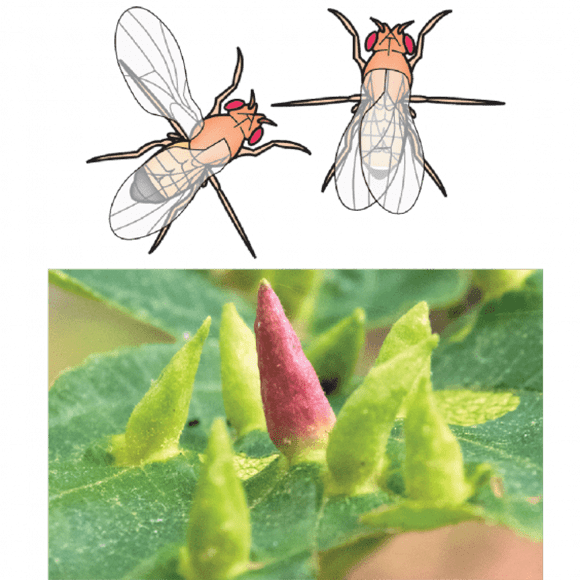
Much of our work is focused on a group of closely related species in the Drosophila melanogaster species group. We focus on this group because many of these species can be intercrossed and most of the crossable species pairs share gene synteny on all chromosomes. In addition, this species group displays enormous morphological, physiological, behavioral and ecological diversity. This rather unusual set of evolutionary circumstances -- combined with the close evolutionary relatedness of these species to the model species D. melanogaster -- provides a rare opportunity to utilize fine-scale genetic analysis to identify the genetic causes of phenotypic evolution.
To leverage these biological facts, we are developing a set of genomics and genetics tools to accelerate genetic analysis of phenotypic evolution in this group of species.
Projects (2)
Does morphological evolution occur primarily by changes in protein sequences or through changes in cis-regulatory regions? In recent years, this rather simple question has attracted considerable attention and surprisingly robust debate. On one hand, most of the evidence for the molecular causes of phenotypic evolution comes from studies of protein-coding regions. On the other hand, developmental biologists have argued for several decades that changes in the cis-regulatory regions of genes seem a more probable route to developmental evolution.
Nailing down the role of cis-regulatory regions in developmental evolution has been much more difficult than gathering the evidence that protein-coding changes contribute to phenotypic evolution. This is largely because the cis-regulatory "code" is not as well understood as the genetic code for proteins and because we possess more limited tools for studying cis-regulatory function than for studying protein function. Nonetheless, in recent years many groups have succeeded in demonstrating an important role for cis-regulatory evolution.
Several outstanding questions remain. How precisely do cis-regulatory regions evolve?; Is cis-regulatory evolution more common for genes in particular parts of regulatory networks?; And can we detect when and how natural selection has acted on cis-regulatory regions?
We did not set out to investigate cis-regulatory evolution, but we stumbled into this problem by performing an unbiased experiment to identify the genetic causes of a simple morphological difference between species, the loss of trichomes in one species of Drosophila.
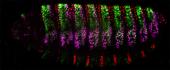
The first-instar larvae of Drosophila sechellia display a different pattern of dorsal trichomes than the closely related species D. melanogaster, D. simulans and D. mauritiana. D. sechellia larvae are missing a broad swath of dorsal trichomes and a patch of lateral trichomes on most segments along the body axis.
We first determined, through standard genetic crosses, that this entire difference in trichome patterning resulted from evolution of the expression pattern of a gene called shavenbaby-ovo (svb) (Sucena & Stern, 2000). We subsequently showed that the changed expression pattern resulted from changes in at least three separate cis-regulatory modules (McGregor et al., 2007). Each regulatory module generates part of the complete trichome pattern and multiple mutations of relatively small effect must have been fixed in the D. sechellia lineage to generate their naked cuticle.
We have continued to work on this problem by expanding our search for additional enhancers of the svb gene and by performing detailed dissections of the known enhancers. This work is in progress.
Our data indicate that, in this case, morphology has evolved through an abundance of cis-regulatory changes and no protein coding changes. This case study has already provided preliminary answers to the first two questions posed above. For this trait, cis-regulatory regions evolved through multiple, very particular mutations and all of the mutations are clustered in a single gene.
These results help to explain a confusing discrepancy between many observations in evolutionary genetics -- which tend to indicate that evolution often occurs by the accumulation of mutations of small effect -- and the results from evolutionary developmental biology -- which tend to suggest that morphological evolution often occurs by changes at key regulatory genes. In fact, both may be true. Long-term evolutionary changes may have resulted from the accumulation of small-effect mutations at a few, special loci. We call these hot-spot genes and we suspect that the structure of developmental networks helps to explain why mutations at these hot-spot genes are preferred over mutations elsewhere in the network (Stern & Orgogozo, 2008, 2009).
If some genes really are hot spots for evolutionary change, then we would expect to see these genes involved in similar evolutionary changes in other lineages. We therefore examined species of the D. virilis clade of flies, which also display a diversity of larval trichome patterns. In this group, we found that the pattern of svb expression is precisely correlated with larval trichome patterns, suggesting that svb is indeed involved in the evolution of trichome patterns in this group of species as well (Sucena et al., 2003).
We have continued to work on svb evolution in the D. virilis group and we will soon have the results of a definitive test of whether evolution of svb has caused trichome evolution in this group of species. Stay tuned!
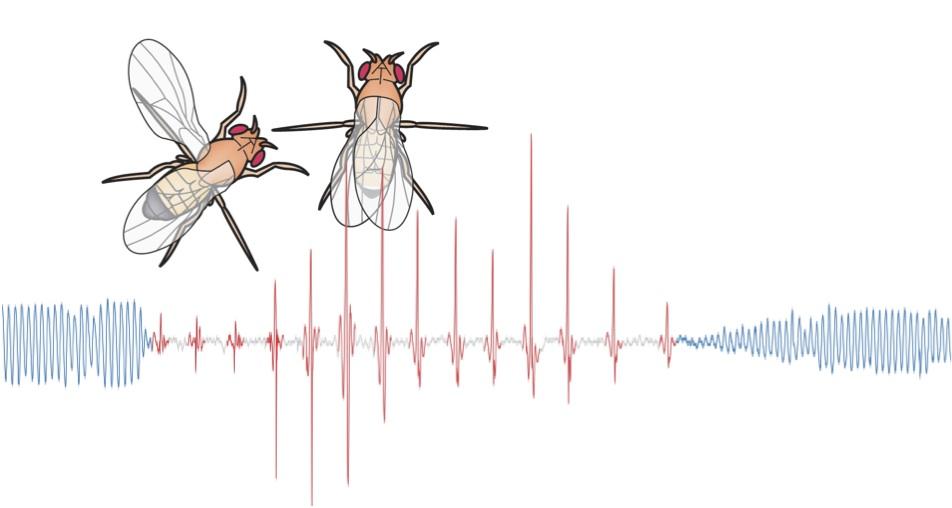
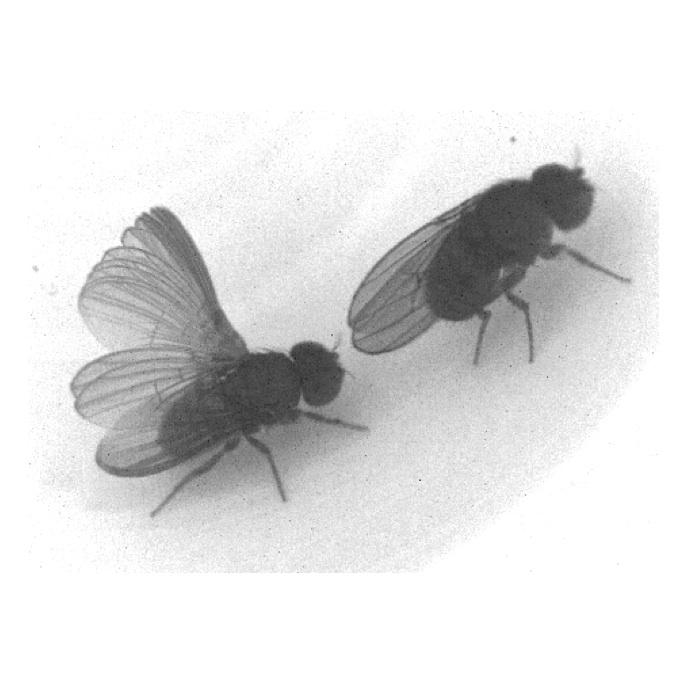
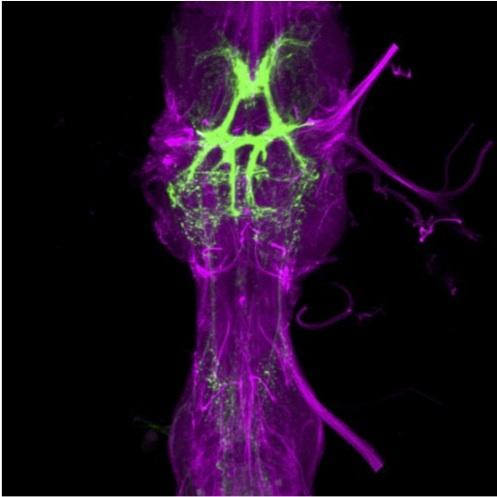
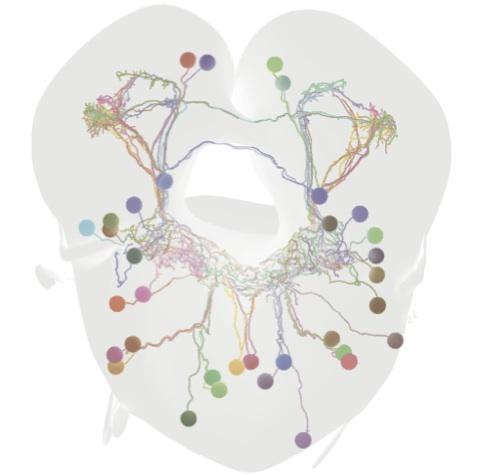
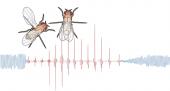
Species of the Drosophila melanogaster species group display a wide diversity of behavior. We have several ongoing projects to explore the genetic basis for the evolution of behavior in this group of species. We are focused, mainly, on the evolution of courtship song. All of our behavior projects are in an early stage of development. Our long-term goals for the study behavior are similar to our goals for the study of development. What genes have evolved to generate new patterns of behavior? How have these gees evolved? How do these genetic changes alter function of the nervous system?
-
-
David Stern Lab Head
-
Justin Crocker
-
Yun Ding Postdoctoral Associate
-
Ji-Young Kim Research Staff
-
Andrew Lemire Senior Scientist
-
Josh Mast
-
Ella Preger-Ben Noon Visiting Scientist
-
Christine Morkunas
Prior Publications (7)
Morphology evolves often through changes in developmental genes, but the causal mutations, and their effects, remain largely unknown. The evolution of naked cuticle on larvae of Drosophila sechellia resulted from changes in five transcriptional enhancers of shavenbaby (svb), a transcript of the ovo locus that encodes a transcription factor that governs morphogenesis of microtrichiae, hereafter called 'trichomes'. Here we show that the function of one of these enhancers evolved through multiple single-nucleotide substitutions that altered both the timing and level of svb expression. The consequences of these nucleotide substitutions on larval morphology were quantified with a novel functional assay. We found that each substitution had a relatively small phenotypic effect, and that many nucleotide changes account for this large morphological difference. In addition, we observed that the substitutions had non-additive effects. These data provide unprecedented resolution of the phenotypic effects of substitutions and show how individual nucleotide changes in a transcriptional enhancer have caused morphological evolution.
We present a new approach to genotyping based on multiplexed shotgun sequencing that can identify recombination breakpoints in a large number of individuals simultaneously at a resolution sufficient for most mapping purposes, such as quantitative trait locus (QTL) mapping and mapping of induced mutations. We first describe a simple library construction protocol that uses just 10 ng of genomic DNA per individual and makes the approach accessible to any laboratory with standard molecular biology equipment. Sequencing this library results in a large number of sequence reads widely distributed across the genomes of multiplexed bar-coded individuals. We develop a Hidden Markov Model to estimate ancestry at all genomic locations in all individuals using these data. We demonstrate the utility of the approach by mapping a dominant marker allele in D. simulans to within 105 kb of its true position using 96 F1-backcross individuals genotyped in a single lane on an Illumina Genome Analyzer. We further demonstrate the utility of our method by genetically mapping more than 400 previously unassembled D. simulans contigs to linkage groups and by evaluating the quality of targeted introgression lines. At this level of multiplexing and divergence between strains, our method allows estimation of recombination breakpoints to a median of 38-kb intervals. Our analysis suggests that higher levels of multiplexing and/or use of strains with lower levels of divergence are practicable.
Ever since the integration of Mendelian genetics into evolutionary biology in the early 20th century, evolutionary geneticists have for the most part treated genes and mutations as generic entities. However, recent observations indicate that all genes are not equal in the eyes of evolution. Evolutionarily relevant mutations tend to accumulate in hotspot genes and at specific positions within genes. Genetic evolution is constrained by gene function, the structure of genetic networks, and population biology. The genetic basis of evolution may be predictable to some extent, and further understanding of this predictability requires incorporation of the specific functions and characteristics of genes into evolutionary theory.
Is genetic evolution predictable? Evolutionary developmental biologists have argued that, at least for morphological traits, the answer is a resounding yes. Most mutations causing morphological variation are expected to reside in the cis-regulatory, rather than the coding, regions of developmental genes. This "cis-regulatory hypothesis" has recently come under attack. In this review, we first describe and critique the arguments that have been proposed in support of the cis-regulatory hypothesis. We then test the empirical support for the cis-regulatory hypothesis with a comprehensive survey of mutations responsible for phenotypic evolution in multicellular organisms. Cis-regulatory mutations currently represent approximately 22% of 331 identified genetic changes although the number of cis-regulatory changes published annually is rapidly increasing. Above the species level, cis-regulatory mutations altering morphology are more common than coding changes. Also, above the species level cis-regulatory mutations predominate for genes not involved in terminal differentiation. These patterns imply that the simple question "Do coding or cis-regulatory mutations cause more phenotypic evolution?" hides more interesting phenomena. Evolution in different kinds of populations and over different durations may result in selection of different kinds of mutations. Predicting the genetic basis of evolution requires a comprehensive synthesis of molecular developmental biology and population genetics.
One central, and yet unsolved, question in evolutionary biology is the relationship between the genetic variants segregating within species and the causes of morphological differences between species. The classic neo-darwinian view postulates that species differences result from the accumulation of small-effect changes at multiple loci. However, many examples support the possible role of larger abrupt changes in the expression of developmental genes in morphological evolution. Although this evidence might be considered a challenge to a neo-darwinian micromutationist view of evolution, there are currently few examples of the actual genes causing morphological differences between species. Here we examine the genetic basis of a trichome pattern difference between Drosophila species, previously shown to result from the evolution of a single gene, shavenbaby (svb), probably through cis-regulatory changes. We first identified three distinct svb enhancers from D. melanogaster driving reporter gene expression in partly overlapping patterns that together recapitulate endogenous svb expression. All three homologous enhancers from D. sechellia drive expression in modified patterns, in a direction consistent with the evolved svb expression pattern. To test the influence of these enhancers on the actual phenotypic difference, we conducted interspecific genetic mapping at a resolution sufficient to recover multiple intragenic recombinants. This functional analysis revealed that independent genetic regions upstream of svb that overlap the three identified enhancers are collectively required to generate the D. sechellia trichome pattern. Our results demonstrate that the accumulation of multiple small-effect changes at a single locus underlies the evolution of a morphological difference between species. These data support the view that alleles of large effect that distinguish species may sometimes reflect the accumulation of multiple mutations of small effect at select genes.