
Filter
Associated Lab
- Ahrens Lab (75) Apply Ahrens Lab filter
- Aso Lab (1) Apply Aso Lab filter
- Branson Lab (1) Apply Branson Lab filter
- Fitzgerald Lab (1) Apply Fitzgerald Lab filter
- Freeman Lab (5) Apply Freeman Lab filter
- Harris Lab (2) Apply Harris Lab filter
- Jayaraman Lab (2) Apply Jayaraman Lab filter
- Johnson Lab (1) Apply Johnson Lab filter
- Keller Lab (5) Apply Keller Lab filter
- Lavis Lab (3) Apply Lavis Lab filter
- Liu (Zhe) Lab (1) Apply Liu (Zhe) Lab filter
- Looger Lab (7) Apply Looger Lab filter
- Pedram Lab (2) Apply Pedram Lab filter
- Podgorski Lab (3) Apply Podgorski Lab filter
- Satou Lab (1) Apply Satou Lab filter
- Schreiter Lab (4) Apply Schreiter Lab filter
- Shroff Lab (2) Apply Shroff Lab filter
- Stringer Lab (1) Apply Stringer Lab filter
- Svoboda Lab (4) Apply Svoboda Lab filter
- Tillberg Lab (1) Apply Tillberg Lab filter
- Turaga Lab (2) Apply Turaga Lab filter
- Turner Lab (2) Apply Turner Lab filter
- Wang (Shaohe) Lab (2) Apply Wang (Shaohe) Lab filter
- Zlatic Lab (1) Apply Zlatic Lab filter
Associated Project Team
Publication Date
- 2026 (6) Apply 2026 filter
- 2025 (12) Apply 2025 filter
- 2024 (6) Apply 2024 filter
- 2023 (4) Apply 2023 filter
- 2022 (4) Apply 2022 filter
- 2021 (2) Apply 2021 filter
- 2020 (4) Apply 2020 filter
- 2019 (5) Apply 2019 filter
- 2018 (4) Apply 2018 filter
- 2017 (2) Apply 2017 filter
- 2016 (7) Apply 2016 filter
- 2015 (3) Apply 2015 filter
- 2014 (3) Apply 2014 filter
- 2013 (5) Apply 2013 filter
- 2012 (1) Apply 2012 filter
- 2011 (1) Apply 2011 filter
- 2010 (1) Apply 2010 filter
- 2008 (3) Apply 2008 filter
- 2006 (2) Apply 2006 filter
Type of Publication
75 Publications
Showing 11-20 of 75 resultsAnimals rapidly adapt to changing circumstances by shifting how they perceive, integrate, and act. Such flexibility is often attributed to transitions between internal states that exert widespread influence across the brain. Yet the mechanisms that drive state transitions and how they reconfigure brainwide computation remain unclear. Larval zebrafish, when actions are rendered futile by decoupling visual flow feedback from swimming in virtual reality, enter a temporary passive, energy-preserving state. In this state, astrocyte calcium levels are elevated, and swim reinitiation requires greater accumulated visual motion. Using whole-brain, cellular-resolution activity imaging, we observed widespread circuit alterations underlying this disengaged state: neuronal visual responses weakened, visual motion integration over time became dramatically leakier, motor inhibition increased, and motor preparation slowed, together suppressing conversion of sensory evidence into action. Astrocyte calcium rose during futile swimming, tracked the emergence and resolution of these brainwide changes, and was both necessary and sufficient to drive them. Thus, astrocytes orchestrate internal states that profoundly reshape neural computations, most powerfully at intermediate integrative processing stages, to meet changing demands.
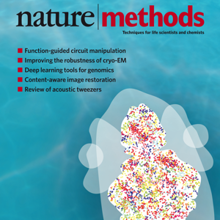
Whole-brain imaging allows for comprehensive functional mapping of distributed neural pathways, but neuronal perturbation experiments are usually limited to targeting predefined regions or genetically identifiable cell types. To complement whole-brain measures of activity with brain-wide manipulations for testing causal interactions, we introduce a system that uses measuredactivity patterns to guide optical perturbations of any subset of neurons in the same fictively behaving larval zebrafish. First, a light-sheet microscope collects whole-brain data that are rapidly analyzed by a distributed computing system to generate functional brain maps. On the basis of these maps, the experimenter can then optically ablate neurons and image activity changes across the brain. We applied this method to characterize contributions of behaviorally tuned populations to the optomotor response. We extended the system to optogenetically stimulate arbitrary subsets of neurons during whole-brain imaging. These open-source methods enable delineating the contributions of neurons to brain-wide circuit dynamics and behavior in individual animals.
In the absence of salient sensory cues to guide behavior, animals must still execute sequences of motor actions in order to forage and explore. How such successive motor actions are coordinated to form global locomotion trajectories is unknown. We mapped the structure of larval zebrafish swim trajectories in homogeneous environments and found that trajectories were characterized by alternating sequences of repeated turns to the left and to the right. Using whole-brain light-sheet imaging, we identified activity relating to the behavior in specific neural populations that we termed the anterior rhombencephalic turning region (ARTR). ARTR perturbations biased swim direction and reduced the dependence of turn direction on turn history, indicating that the ARTR is part of a network generating the temporal correlations in turn direction. We also find suggestive evidence for ARTR mutual inhibition and ARTR projections to premotor neurons. Finally, simulations suggest the observed turn sequences may underlie efficient exploration of local environments.
A fundamental question in neuroscience is how entire neural circuits generate behaviour and adapt it to changes in sensory feedback. Here we use two-photon calcium imaging to record the activity of large populations of neurons at the cellular level, throughout the brain of larval zebrafish expressing a genetically encoded calcium sensor, while the paralysed animals interact fictively with a virtual environment and rapidly adapt their motor output to changes in visual feedback. We decompose the network dynamics involved in adaptive locomotion into four types of neuronal response properties, and provide anatomical maps of the corresponding sites. A subset of these signals occurred during behavioural adjustments and are candidates for the functional elements that drive motor learning. Lesions to the inferior olive indicate a specific functional role for olivocerebellar circuitry in adaptive locomotion. This study enables the analysis of brain-wide dynamics at single-cell resolution during behaviour.
Simultaneous recordings of large populations of neurons in behaving animals allow detailed observation of high-dimensional, complex brain activity. However, experimental approaches often focus on singular behavioral paradigms or brain areas. Here, we recorded whole-brain neuronal activity of larval zebrafish presented with a battery of visual stimuli while recording fictive motor output. We identified neurons tuned to each stimulus type and motor output and discovered groups of neurons in the anterior hindbrain that respond to different stimuli eliciting similar behavioral responses. These convergent sensorimotor representations were only weakly correlated to instantaneous motor activity, suggesting that they critically inform, but do not directly generate, behavioral choices. To catalog brain-wide activity beyond explicit sensorimotor processing, we developed an unsupervised clustering technique that organizes neurons into functional groups. These analyses enabled a broad overview of the functional organization of the brain and revealed numerous brain nuclei whose neurons exhibit concerted activity patterns.
The brain is tasked with choosing actions that maximize an animal's chances of survival and reproduction. These choices must be flexible and informed by the current state of the environment, the needs of the body, and the outcomes of past actions. This information is physiologically encoded and processed across different brain regions on a wide range of spatial scales, from molecules in single synapses to networks of brain areas. Uncovering these spatially distributed neural interactions underlying behavior requires investigations that span a similar range of spatial scales. Larval zebrafish, given their small size, transparency, and ease of genetic access, are a good model organism for such investigations, allowing the use of modern microscopy, molecular biology, and computational techniques. These approaches are yielding new insights into the mechanistic basis of behavioral states, which we review here and compare to related studies in mammalian species.
Genetically encodable calcium ion (Ca) indicators (GECIs) based on green fluorescent proteins (GFP) are powerful tools for imaging of cell signaling and neural activity in model organisms. Following almost 2 decades of steady improvements in the GFP-based GCaMP series of GECIs, the performance of the most recent generation (i.e., jGCaMP7) may have reached its practical limit due to the inherent properties of GFP. In an effort to sustain the steady progression toward ever-improved GECIs, we undertook the development of a new GECI based on the bright monomeric GFP, mNeonGreen (mNG). The resulting indicator, mNG-GECO1, is 60% brighter than GCaMP6s in vitro and provides comparable performance as demonstrated by imaging Ca dynamics in cultured cells, primary neurons, and in vivo in larval zebrafish. These results suggest that mNG-GECO1 is a promising next-generation GECI that could inherit the mantle of GCaMP and allow the steady improvement of GECIs to continue for generations to come.
Imaging changes in membrane potential using genetically encoded fluorescent voltage indicators (GEVIs) has great potential for monitoring neuronal activity with high spatial and temporal resolution. Brightness and photostability of fluorescent proteins and rhodopsins have limited the utility of existing GEVIs. We engineered a novel GEVI, "Voltron", that utilizes bright and photostable synthetic dyes instead of protein-based fluorophores, extending the combined duration of imaging and number of neurons imaged simultaneously by more than tenfold relative to existing GEVIs. We used Voltron for in vivo voltage imaging in mice, zebrafish, and fruit flies. In mouse cortex, Voltron allowed single-trial recording of spikes and subthreshold voltage signals from dozens of neurons simultaneously, over 15 min of continuous imaging. In larval zebrafish, Voltron enabled the precise correlation of spike timing with behavior.
Increasing the volumetric imaging speed of light-sheet microscopy will improve its ability to detect fast changes in neural activity. Here, a system is introduced for brain-wide imaging of neural activity in the larval zebrafish by coupling structured illumination with cubic phase extended depth-of-field (EDoF) pupil encoding. This microscope enables faster light-sheet imaging and facilitates arbitrary plane scanning—removing constraints on acquisition speed, alignment tolerances, and physical motion near the sample. The usefulness of this method is demonstrated by performing multi-plane calcium imaging in the fish brain with a 416×832×160 μm field of view at 33 Hz. The optomotor response behavior of the zebrafish is monitored at high speeds, and time-locked correlations of neuronal activity are resolved across its brain.