
Filter
Associated Lab
- Ahrens Lab (1) Apply Ahrens Lab filter
- Aso Lab (4) Apply Aso Lab filter
- Branson Lab (53) Apply Branson Lab filter
- Card Lab (3) Apply Card Lab filter
- Cardona Lab (1) Apply Cardona Lab filter
- Dickson Lab (1) Apply Dickson Lab filter
- Dudman Lab (1) Apply Dudman Lab filter
- Fetter Lab (1) Apply Fetter Lab filter
- Freeman Lab (2) Apply Freeman Lab filter
- Harris Lab (1) Apply Harris Lab filter
- Heberlein Lab (1) Apply Heberlein Lab filter
- Jayaraman Lab (1) Apply Jayaraman Lab filter
- Karpova Lab (1) Apply Karpova Lab filter
- Keller Lab (3) Apply Keller Lab filter
- Otopalik Lab (1) Apply Otopalik Lab filter
- Pachitariu Lab (1) Apply Pachitariu Lab filter
- Reiser Lab (4) Apply Reiser Lab filter
- Rubin Lab (8) Apply Rubin Lab filter
- Simpson Lab (1) Apply Simpson Lab filter
- Svoboda Lab (1) Apply Svoboda Lab filter
- Tervo Lab (1) Apply Tervo Lab filter
- Truman Lab (1) Apply Truman Lab filter
- Turaga Lab (5) Apply Turaga Lab filter
- Zlatic Lab (1) Apply Zlatic Lab filter
Associated Project Team
Publication Date
- 2025 (4) Apply 2025 filter
- 2024 (4) Apply 2024 filter
- 2023 (2) Apply 2023 filter
- 2021 (2) Apply 2021 filter
- 2020 (3) Apply 2020 filter
- 2019 (3) Apply 2019 filter
- 2018 (5) Apply 2018 filter
- 2017 (7) Apply 2017 filter
- 2016 (5) Apply 2016 filter
- 2015 (6) Apply 2015 filter
- 2014 (6) Apply 2014 filter
- 2012 (3) Apply 2012 filter
- 2011 (1) Apply 2011 filter
- 2009 (1) Apply 2009 filter
- 2005 (1) Apply 2005 filter
Type of Publication
53 Publications
Showing 41-50 of 53 resultsNatural events present multiple types of sensory cues, each detected by a specialized sensory modality. Combining information from several modalities is essential for the selection of appropriate actions. Key to understanding multimodal computations is determining the structural patterns of multimodal convergence and how these patterns contribute to behaviour. Modalities could converge early, late or at multiple levels in the sensory processing hierarchy. Here we show that combining mechanosensory and nociceptive cues synergistically enhances the selection of the fastest mode of escape locomotion in Drosophila larvae. In an electron microscopy volume that spans the entire insect nervous system, we reconstructed the multisensory circuit supporting the synergy, spanning multiple levels of the sensory processing hierarchy. The wiring diagram revealed a complex multilevel multimodal convergence architecture. Using behavioural and physiological studies, we identified functionally connected circuit nodes that trigger the fastest locomotor mode, and others that facilitate it, and we provide evidence that multiple levels of multimodal integration contribute to escape mode selection. We propose that the multilevel multimodal convergence architecture may be a general feature of multisensory circuits enabling complex input–output functions and selective tuning to ecologically relevant combinations of cues.
Animals discriminate stimuli, learn their predictive value and use this knowledge to modify their behavior. In Drosophila, the mushroom body (MB) plays a key role in these processes. Sensory stimuli are sparsely represented by ∼2000 Kenyon cells, which converge onto 34 output neurons (MBONs) of 21 types. We studied the role of MBONs in several associative learning tasks and in sleep regulation, revealing the extent to which information flow is segregated into distinct channels and suggesting possible roles for the multi-layered MBON network. We also show that optogenetic activation of MBONs can, depending on cell type, induce repulsion or attraction in flies. The behavioral effects of MBON perturbation are combinatorial, suggesting that the MBON ensemble collectively represents valence. We propose that local, stimulus-specific dopaminergic modulation selectively alters the balance within the MBON network for those stimuli. Our results suggest that valence encoded by the MBON ensemble biases memory-based action selection.
Behavioral choices that ignore prior experience promote exploration and unpredictability but are seemingly at odds with the brain's tendency to use experience to optimize behavioral choice. Indeed, when faced with virtual competitors, primates resort to strategic counterprediction rather than to stochastic choice. Here, we show that rats also use history- and model-based strategies when faced with similar competitors but can switch to a "stochastic" mode when challenged with a competitor that they cannot defeat by counterprediction. In this mode, outcomes associated with an animal's actions are ignored, and normal engagement of anterior cingulate cortex (ACC) is suppressed. Using circuit perturbations in transgenic rats, we demonstrate that switching between strategic and stochastic behavioral modes is controlled by locus coeruleus input into ACC. Our findings suggest that, under conditions of uncertainty about environmental rules, changes in noradrenergic input alter ACC output and prevent erroneous beliefs from guiding decisions, thus enabling behavioral variation.

The behavior of individuals determines the strength and outcome of ecological interactions, which drive population, community, and ecosystem organization. Bio-logging, such as telemetry and animal-borne imaging, provides essential individual viewpoints, tracks, and life histories, but requires capture of individuals and is often impractical to scale. Recent developments in automated image-based tracking offers opportunities to remotely quantify and understand individual behavior at scales and resolutions not previously possible, providing an essential supplement to other tracking methodologies in ecology. Automated image-based tracking should continue to advance the field of ecology by enabling better understanding of the linkages between individual and higher-level ecological processes, via high-throughput quantitative analysis of complex ecological patterns and processes across scales, including analysis of environmental drivers.

The comprehensive reconstruction of cell lineages in complex multicellular organisms is a central goal of developmental biology. We present an open-source computational framework for the segmentation and tracking of cell nuclei with high accuracy and speed. We demonstrate its (i) generality by reconstructing cell lineages in four-dimensional, terabyte-sized image data sets of fruit fly, zebrafish and mouse embryos acquired with three types of fluorescence microscopes, (ii) scalability by analyzing advanced stages of development with up to 20,000 cells per time point at 26,000 cells min(-1) on a single computer workstation and (iii) ease of use by adjusting only two parameters across all data sets and providing visualization and editing tools for efficient data curation. Our approach achieves on average 97.0% linkage accuracy across all species and imaging modalities. Using our system, we performed the first cell lineage reconstruction of early Drosophila melanogaster nervous system development, revealing neuroblast dynamics throughout an entire embryo.
A general method to recognize and track unmarked animals within a population will enable new studies of social behavior and individuality.
Hb9 is a homeodomain-containing transcription factor that acts in combination with Nkx6, Lim3, and Tail-up (Islet) to guide the stereotyped differentiation, connectivity, and function of a subset of neurons in Drosophila. The role of Hb9 in directing neuronal differentiation is well documented, but the lineage of Hb9(+) neurons is only partly characterized, its regulation is poorly understood, and most of the downstream genes through which it acts remain at large. Here, we complete the lineage tracing of all embryonic Hb9(+) neurons (to eight neuronal lineages) and provide evidence that hb9, lim3, and tail-up are coordinately regulated by a common set of upstream factors. Through the parallel use of micro-array gene expression profiling and the Dam-ID method, we searched for Hb9-regulated genes, uncovering transcription factors as the most over-represented class of genes regulated by Hb9 (and Nkx6) in the CNS. By a nearly ten-to-one ratio, Hb9 represses rather than activates transcription factors, highlighting transcriptional repression of other transcription factors as a core mechanism by which Hb9 governs neuronal determination. From the small set of genes activated by Hb9, we characterized the expression and function of two - fd59a/foxd, which encodes a transcription factor, and Nitric oxide synthase. Under standard lab conditions, both genes are dispensable for Drosophila development, but Nos appears to inhibit hyper-active behavior and fd59a appears to act in octopaminergic neurons to control egg-laying behavior. Together our data clarify the mechanisms through which Hb9 governs neuronal specification and differentiation and provide an initial characterization of the expression and function of Nos and fd59a in the Drosophila CNS.
We present a machine learning–based system for automatically computing interpretable, quantitative measures of animal behavior. Through our interactive system, users encode their intuition about behavior by annotating a small set of video frames. These manual labels are converted into classifiers that can automatically annotate behaviors in screen-scale data sets. Our general-purpose system can create a variety of accurate individual and social behavior classifiers for different organisms, including mice and adult and larval Drosophila.
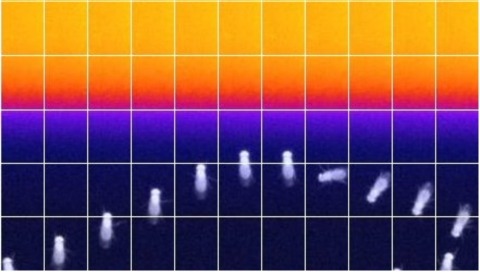
An important role of visual systems is to detect nearby predators, prey, and potential mates [1], which may be distinguished in part by their motion. When an animal is at rest, an object moving in any direction may easily be detected by motion-sensitive visual circuits [2, 3]. During locomotion, however, this strategy is compromised because the observer must detect a moving object within the pattern of optic flow created by its own motion through the stationary background. However, objects that move creating back-to-front (regressive) motion may be unambiguously distinguished from stationary objects because forward locomotion creates only front-to-back (progressive) optic flow. Thus, moving animals should exhibit an enhanced sensitivity to regressively moving objects. We explicitly tested this hypothesis by constructing a simple fly-sized robot that was programmed to interact with a real fly. Our measurements indicate that whereas walking female flies freeze in response to a regressively moving object, they ignore a progressively moving one. Regressive motion salience also explains observations of behaviors exhibited by pairs of walking flies. Because the assumptions underlying the regressive motion salience hypothesis are general, we suspect that the behavior we have observed in Drosophila may be widespread among eyed, motile organisms.